Framing Winter at Bharatpur
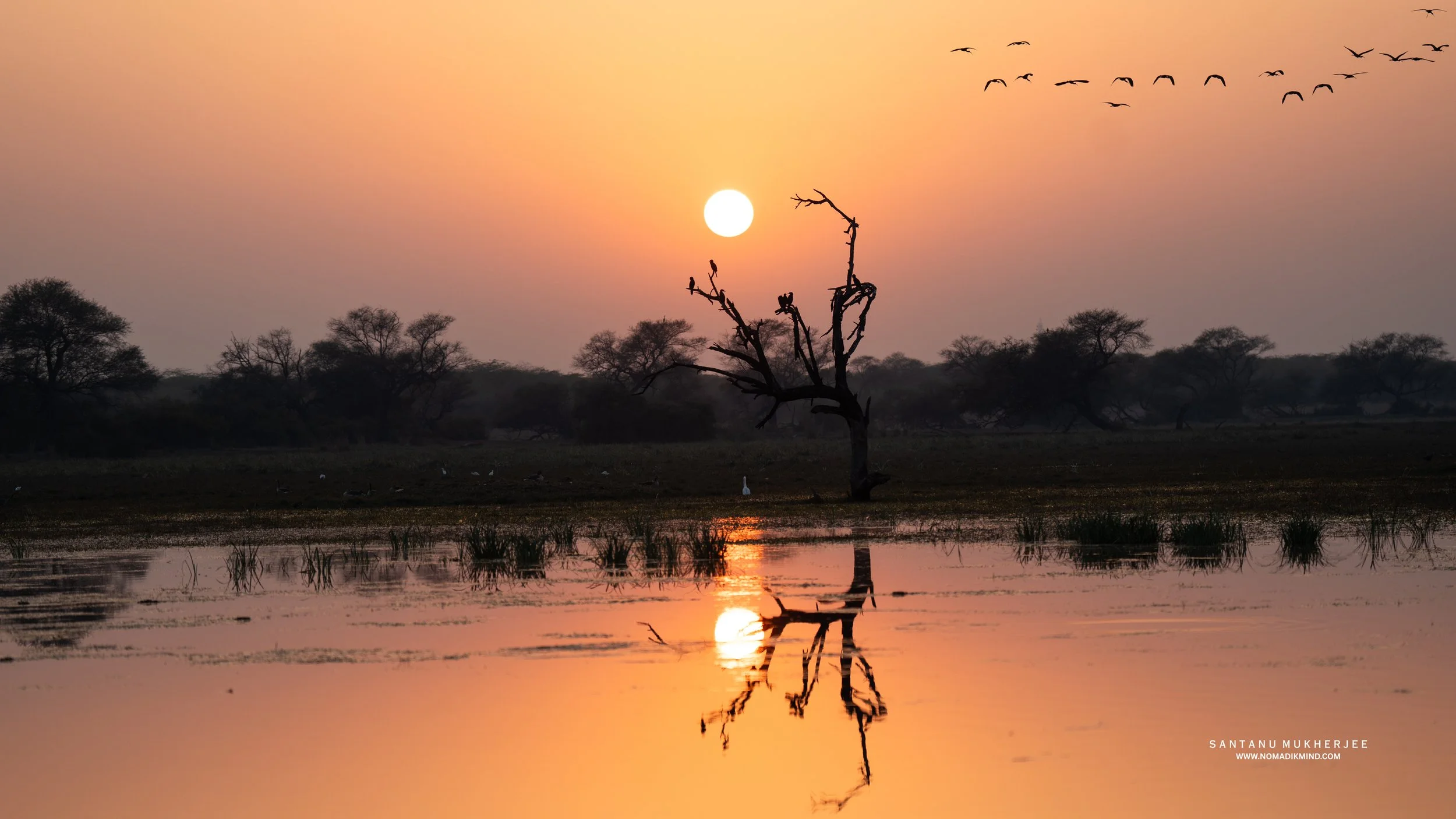
For me, Bharatpur Bird Sanctuary is where I began to understand what it actually means to see. Not look — see. There’s a difference, and this place taught it to me.
Officially known as Keoladeo Ghana National Park — named after a Shiva temple that once stood here — Bharatpur sits in eastern Rajasthan, about fifty kilometres from Agra. Designated a UNESCO World Heritage Site in 1985, it is one of the subcontinent’s most important wintering grounds for migratory birds.
I went in February with a group of photographers, staying at The Birders Inn, a short walk from the sanctuary gate. Three days. Winter. We had come for the birds, of course — but Bharatpur has a way of quietly moving the goalposts on you.
The landscape doesn’t announce itself. No dramatic ridgelines, no dense forest. What you get instead are wetlands, open sky, bare trees, and water that holds the mist longer than it should.
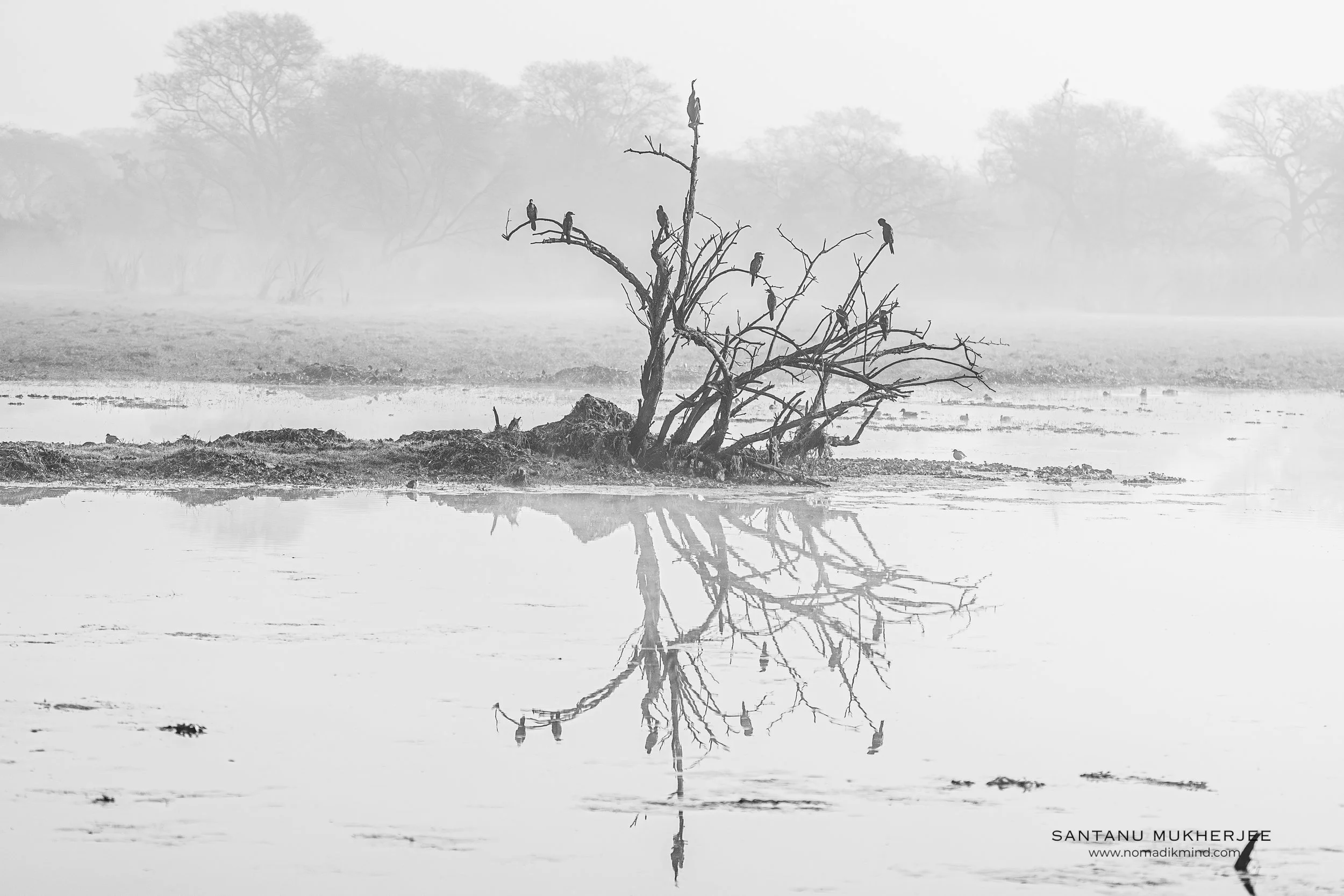
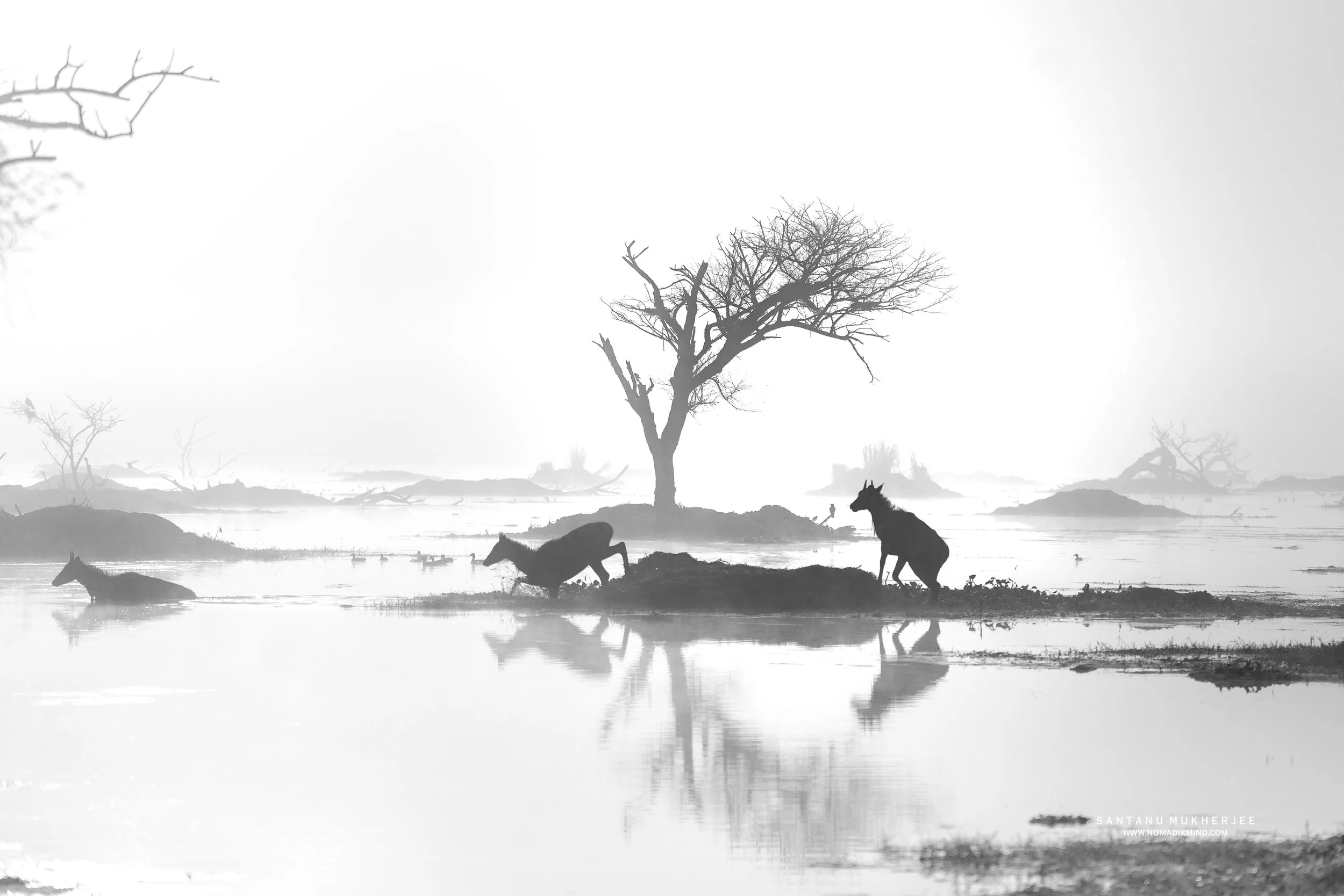
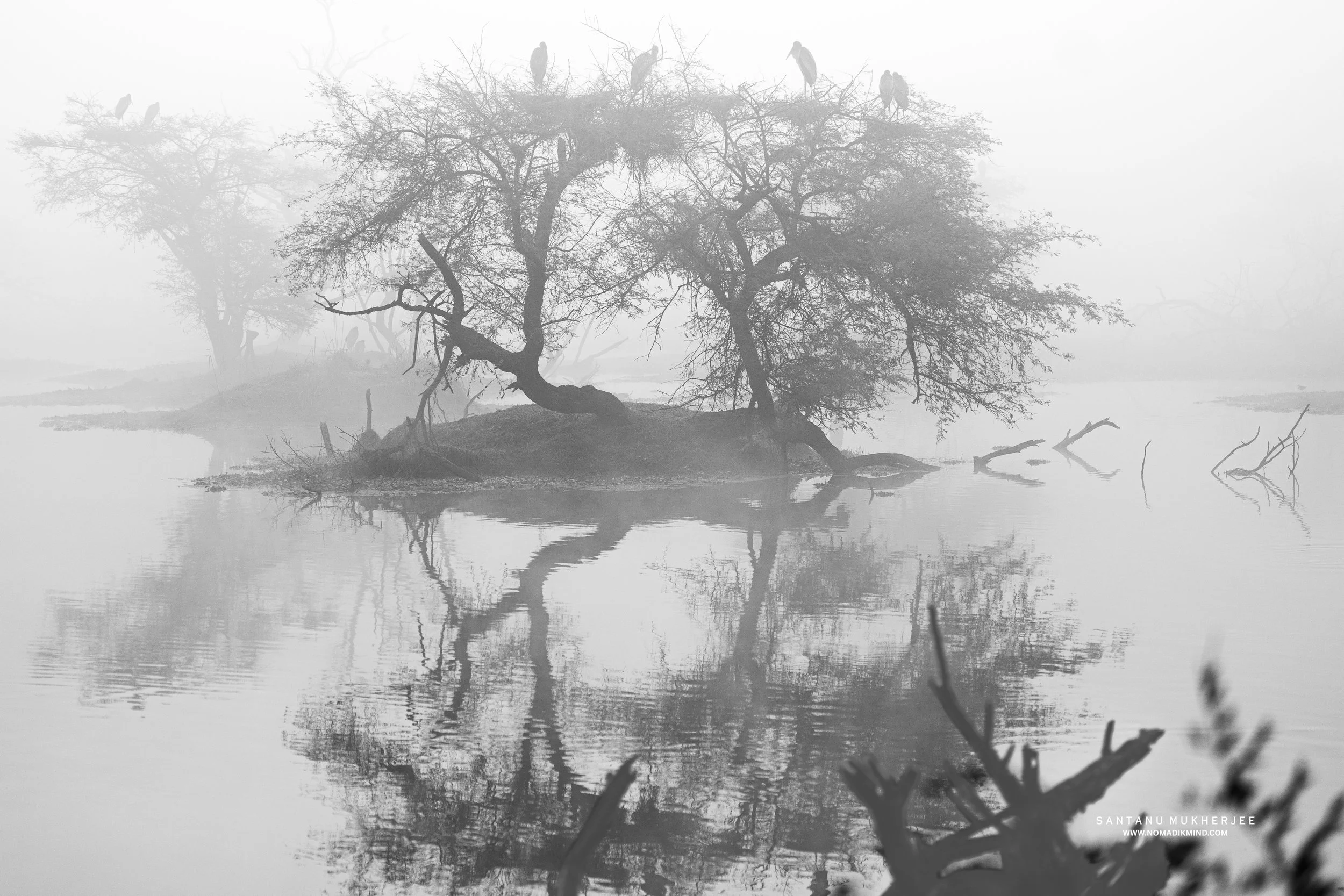
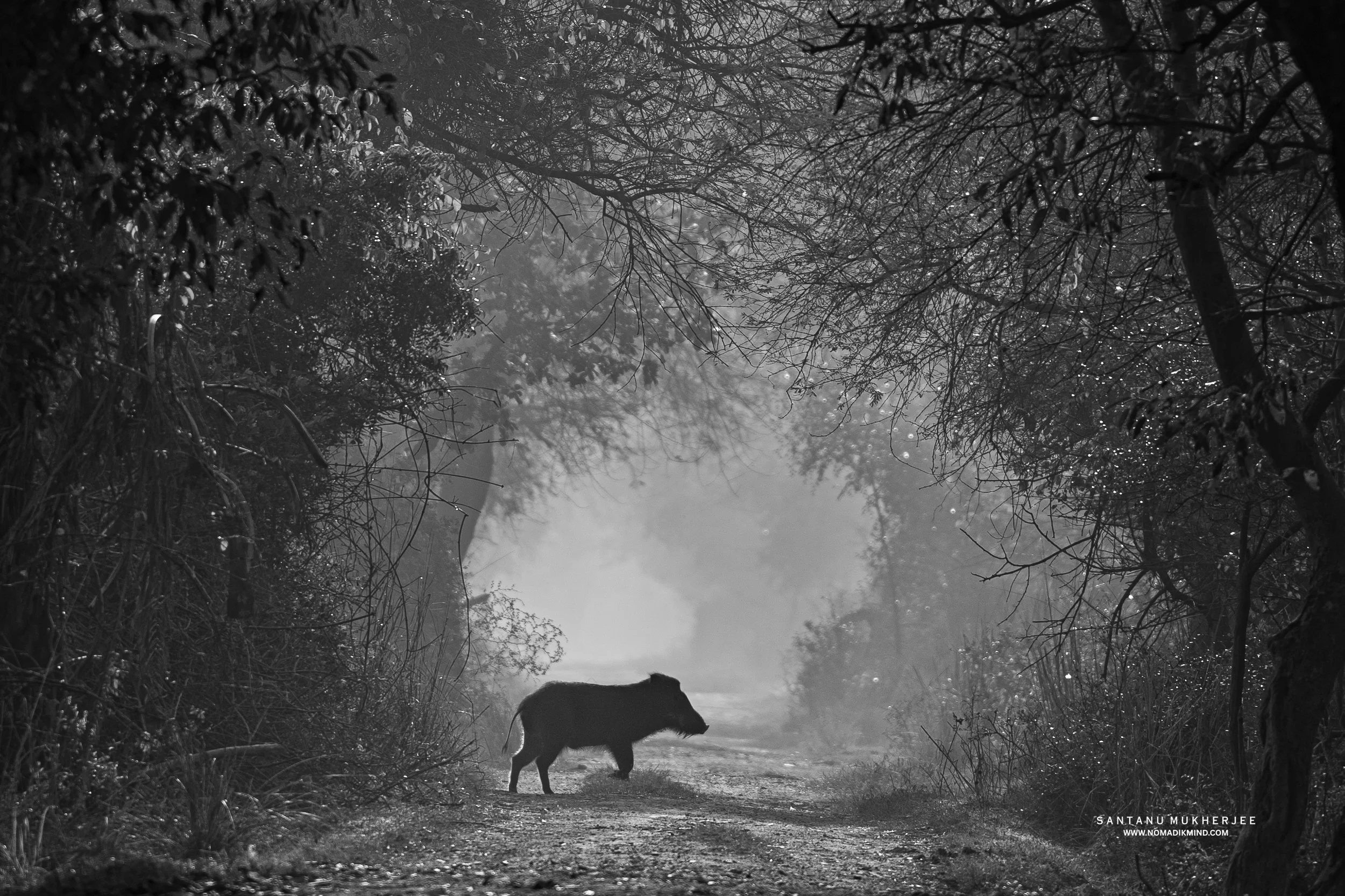
The mornings set the tone. Mist on the water, birds on bare branches, the world dissolving at fifty metres. Occasionally a Nilgai would cross one of the water bodies, unhurried, indifferent to the cold. I kept finding myself photographing the landscape — the birds, the water bodies, the trees, the geometry of a reflection. The mist had already done most of the work. Colour would have been a distraction.
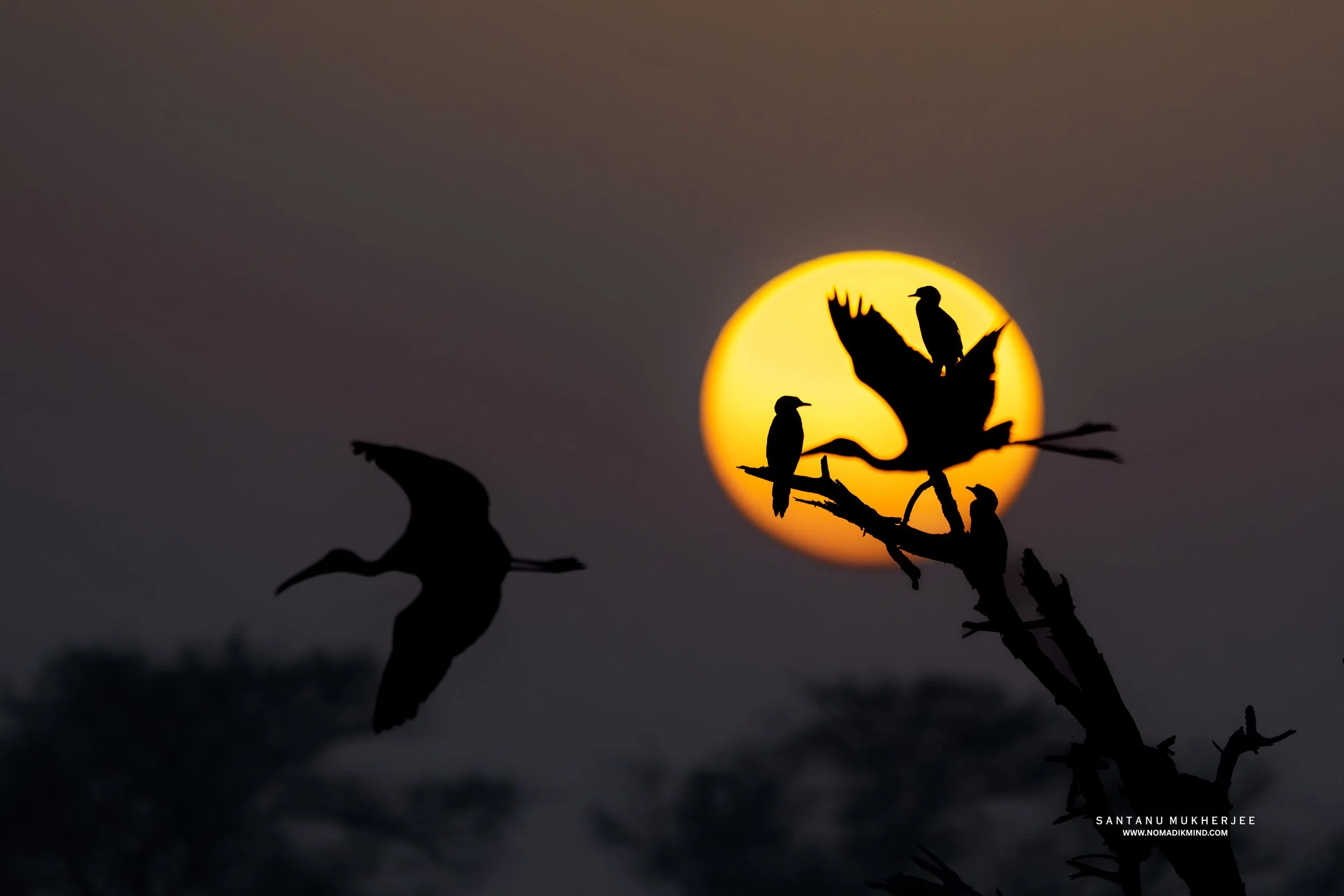
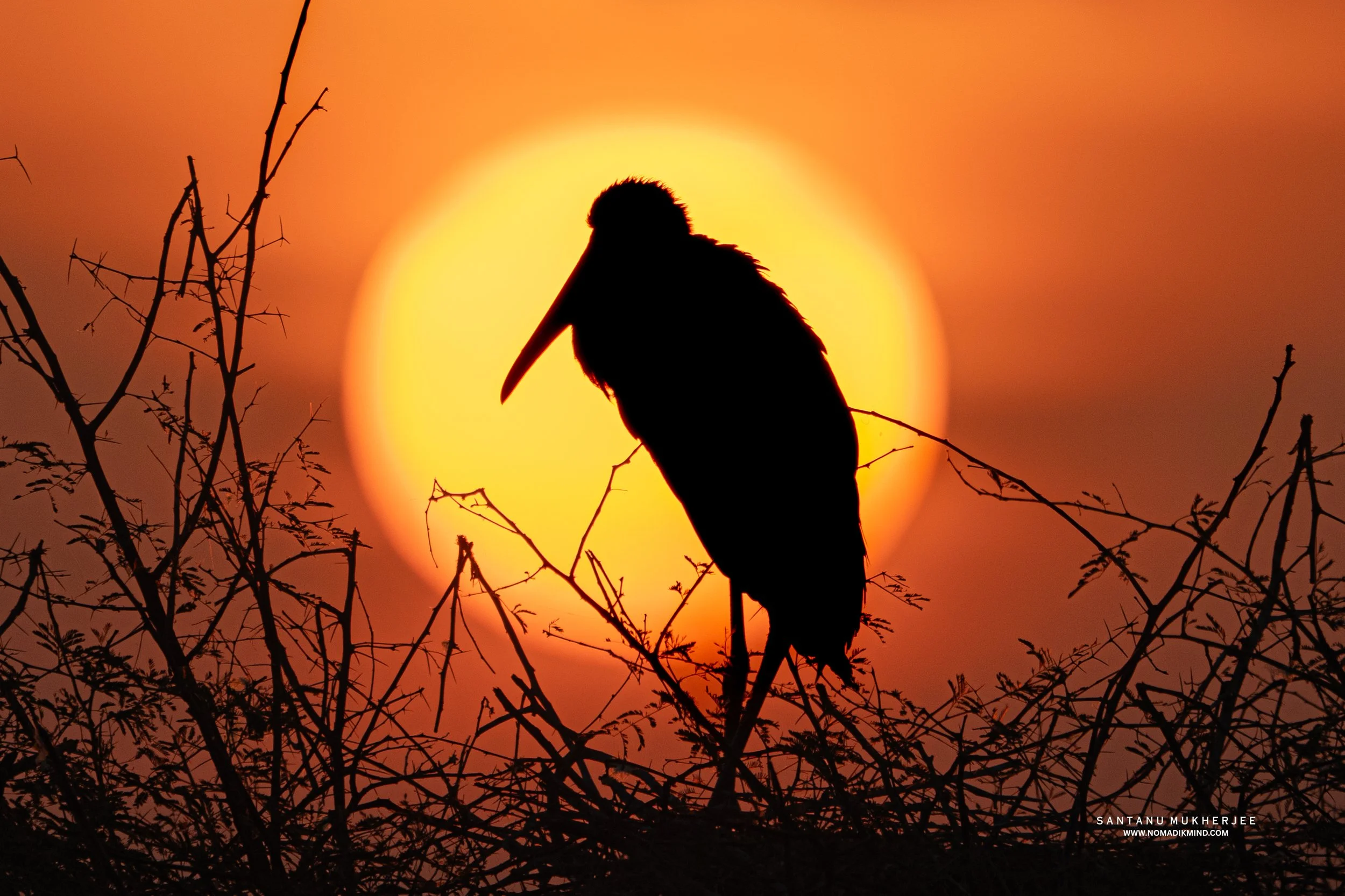
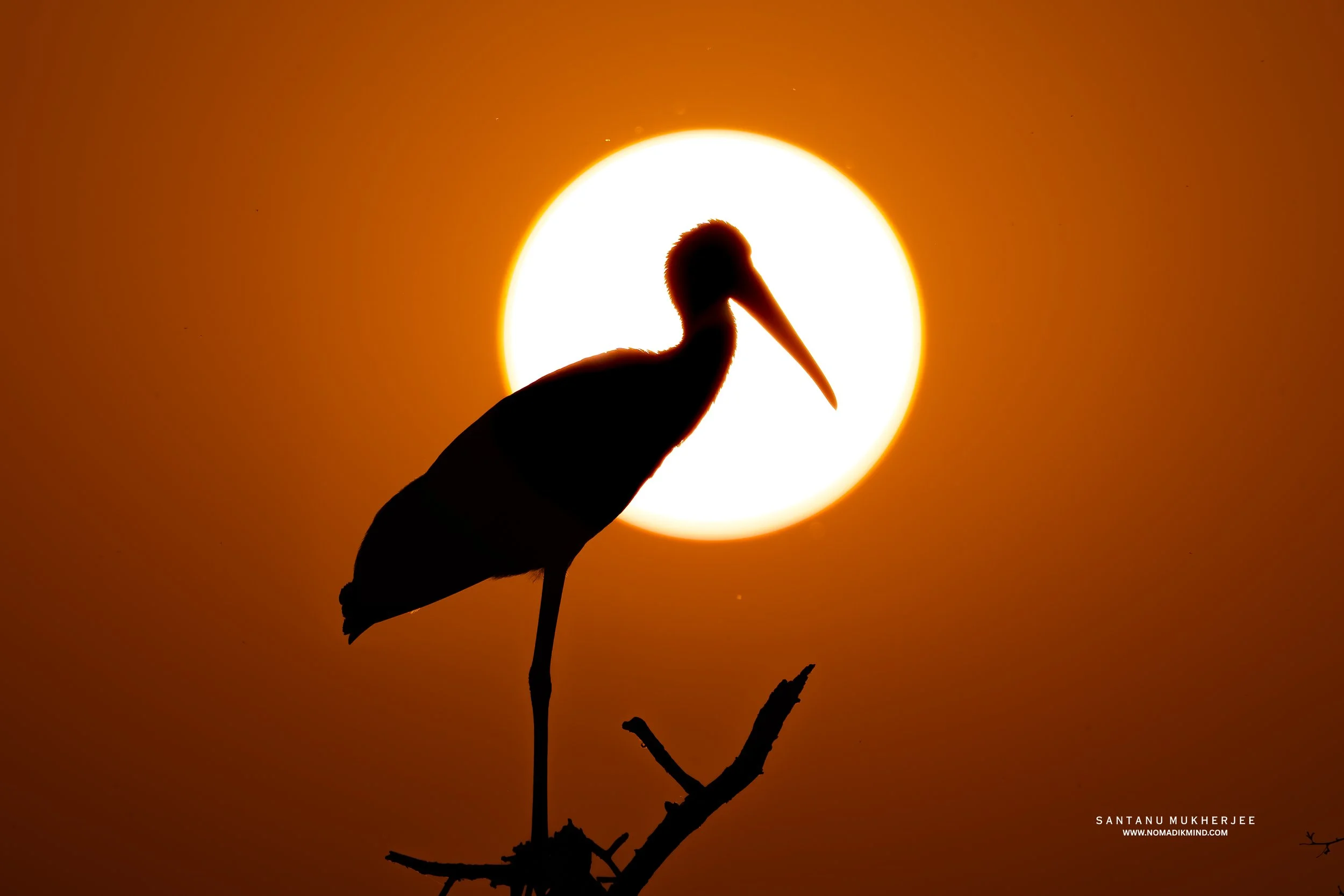
By late afternoon, the light begins its own conversation. At Bharatpur in winter, the sun doesn’t linger — it drops to the waterline and in the last twenty minutes, everything turns. Orange, then molten red, then the disc. I had positioned myself near the roosting trees, knowing what might happen but not when. Then one bird broke from the branch and crossed the disc of the sun at exactly the right angle. You don’t orchestrate that. You position yourself, stay patient, and occasionally the world cooperates.
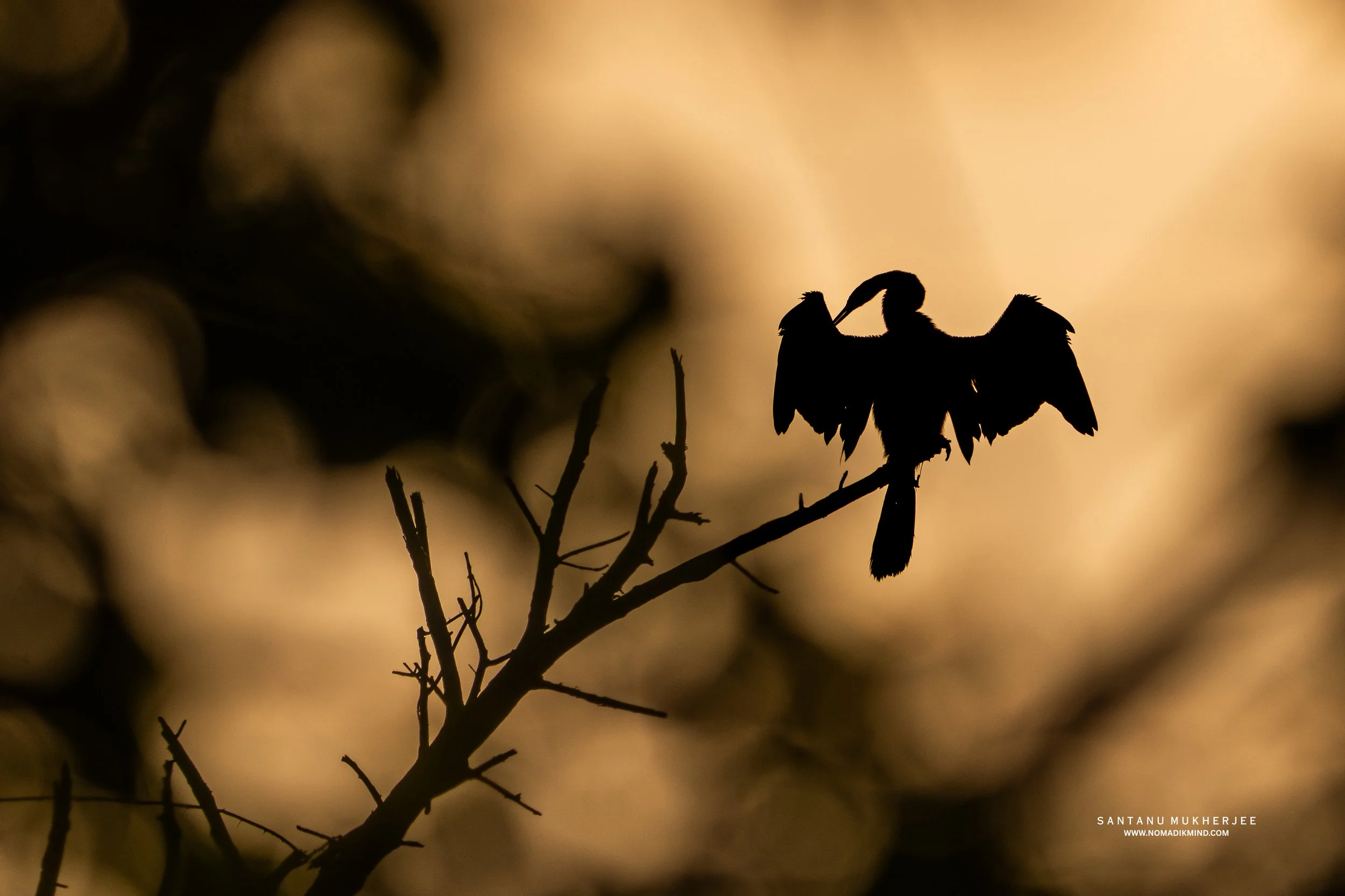
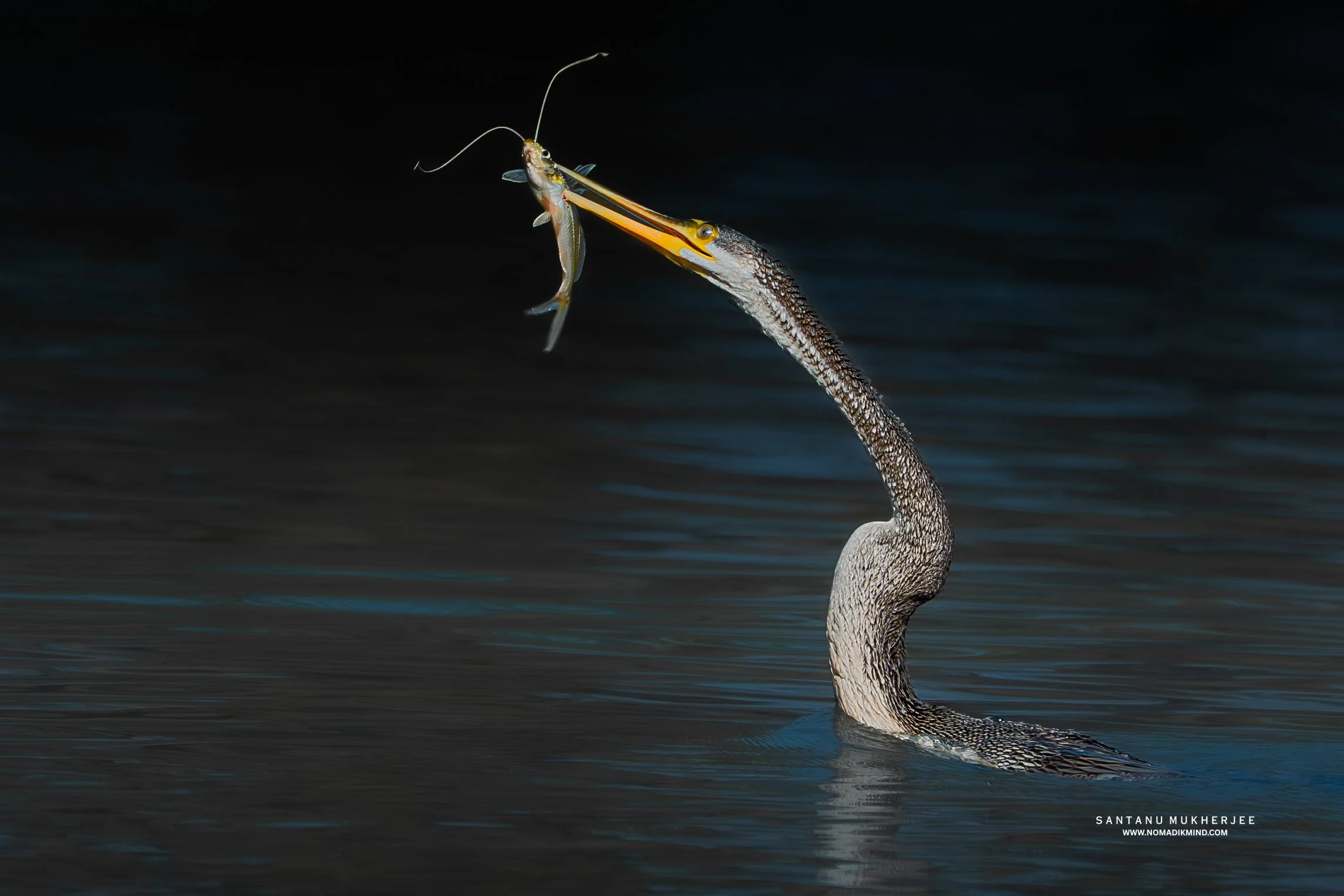
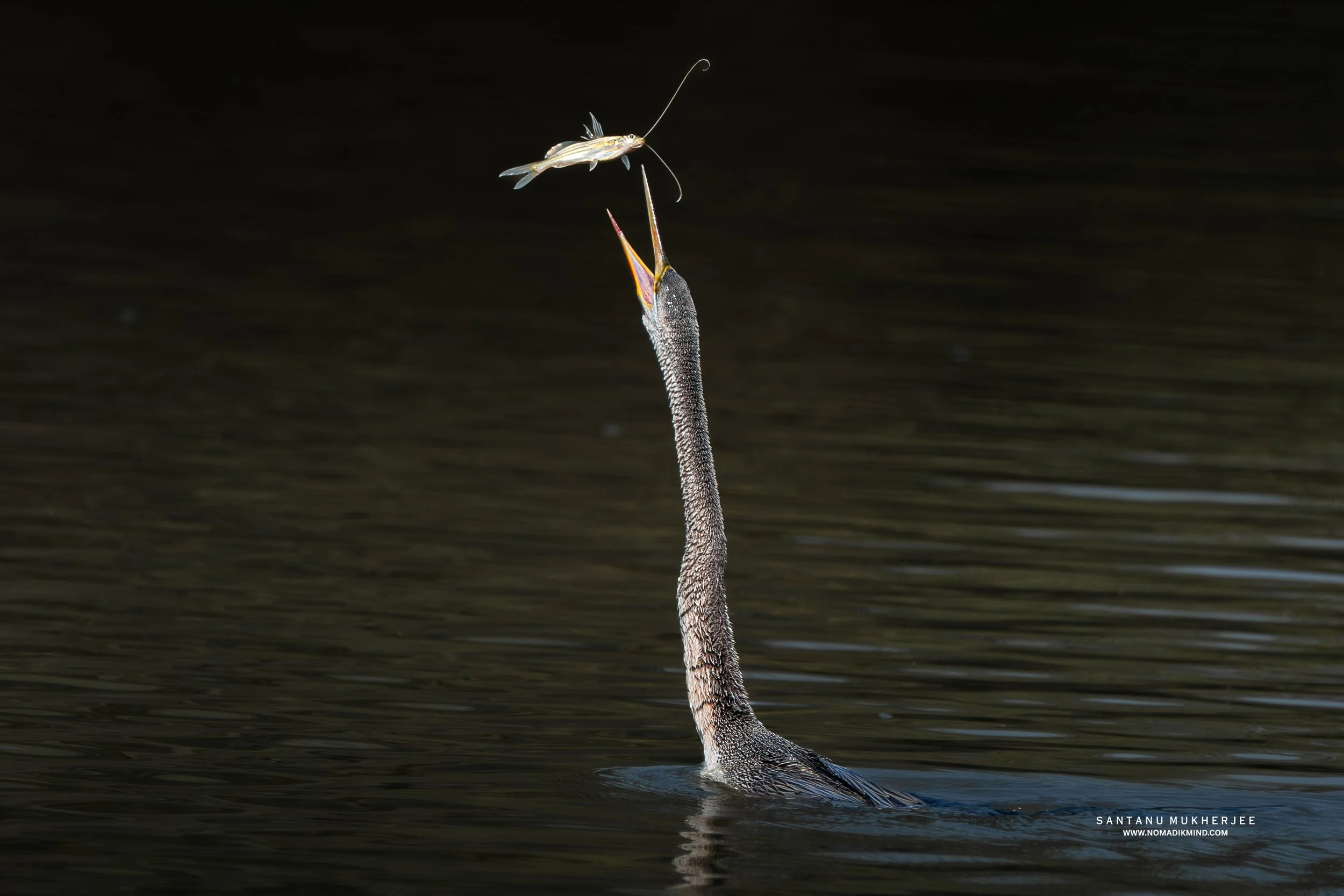
When the afternoon light was too harsh for landscape work, we moved to the darter lake. The darters can be seen sitting still on their perches, wings spread to dry in whatever sun remains. But before that stillness comes the hunt: the bird tosses its catch — usually a catfish — several times in the air, manoeuvring it head-first before swallowing. Blink and you’ve missed it. I was shooting at very high shutter speeds, and for each hundred frames or more, perhaps one or two came out as I’d hoped. The snake-neck curve, the fish mid-air, whiskers visible, everything sharp against a dark background.
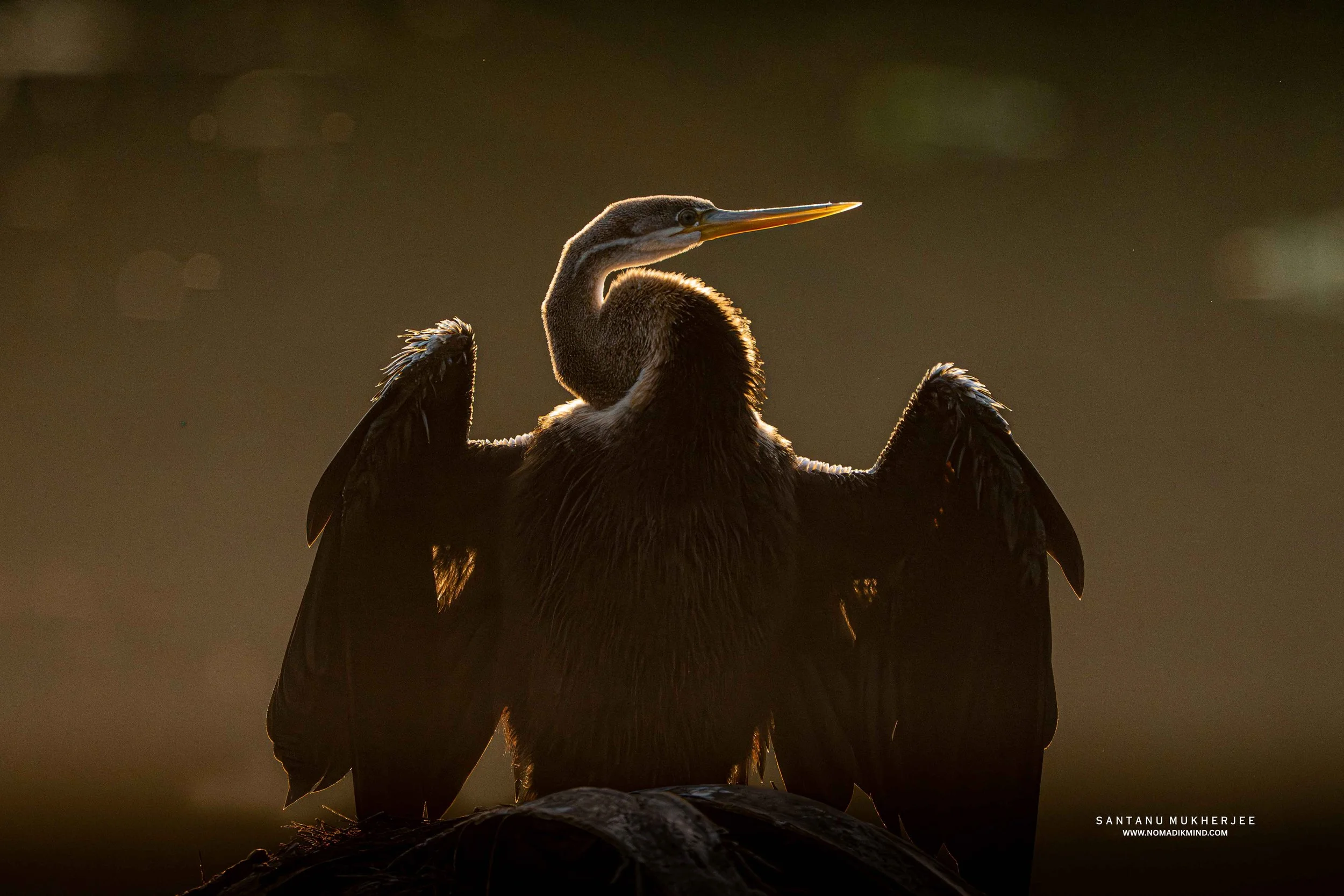
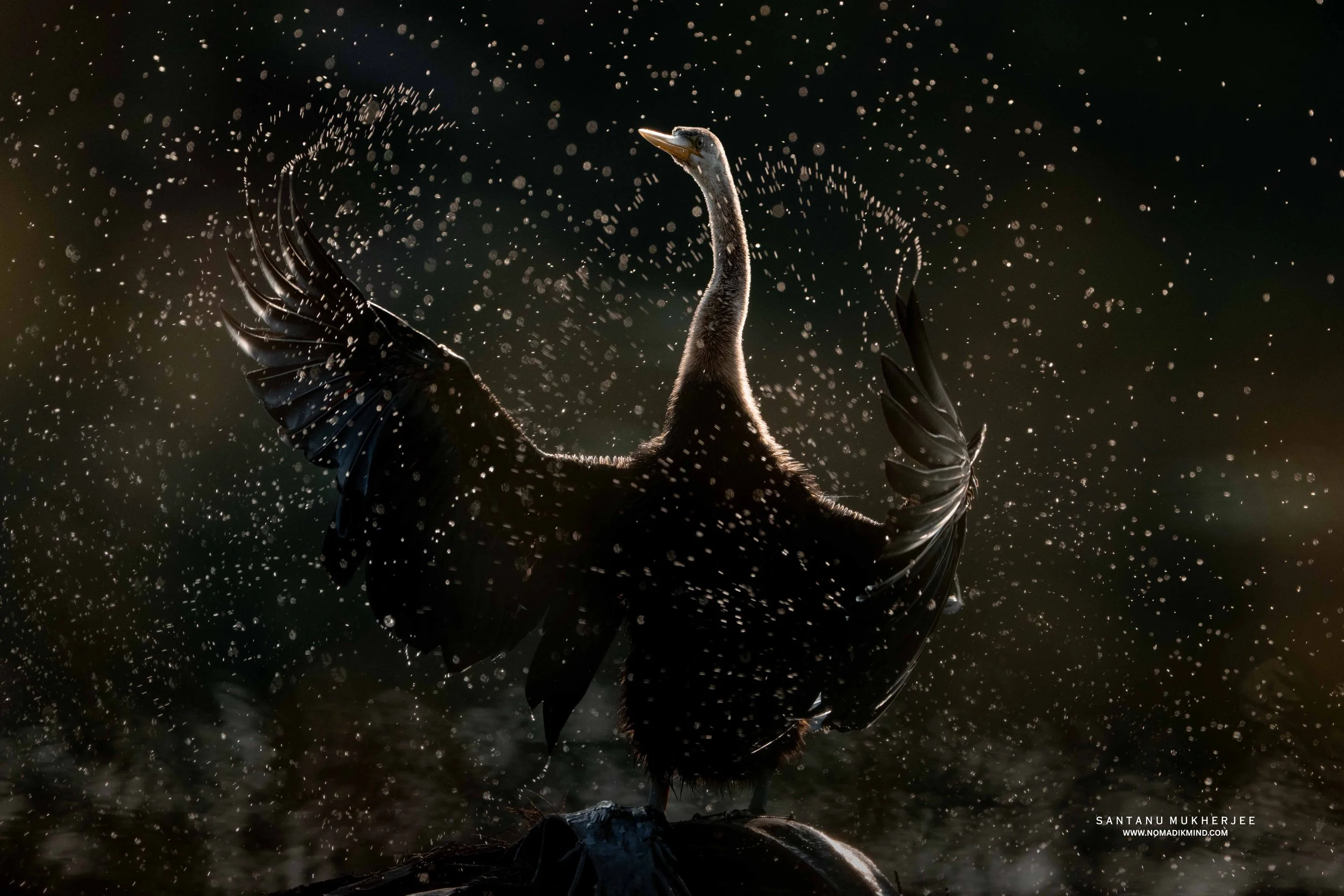
As the sun dropped behind the tree line, the darters spread against the dense foliage offered a different picture entirely — the bird reduced to shape and silhouette, wings held wide, backlit. And then, occasionally, the shake: the bird convulses the water off its feathers in one sudden motion, the backlighting turning every droplet into a point of light. It looked like a private explosion. It lasted less than a second.
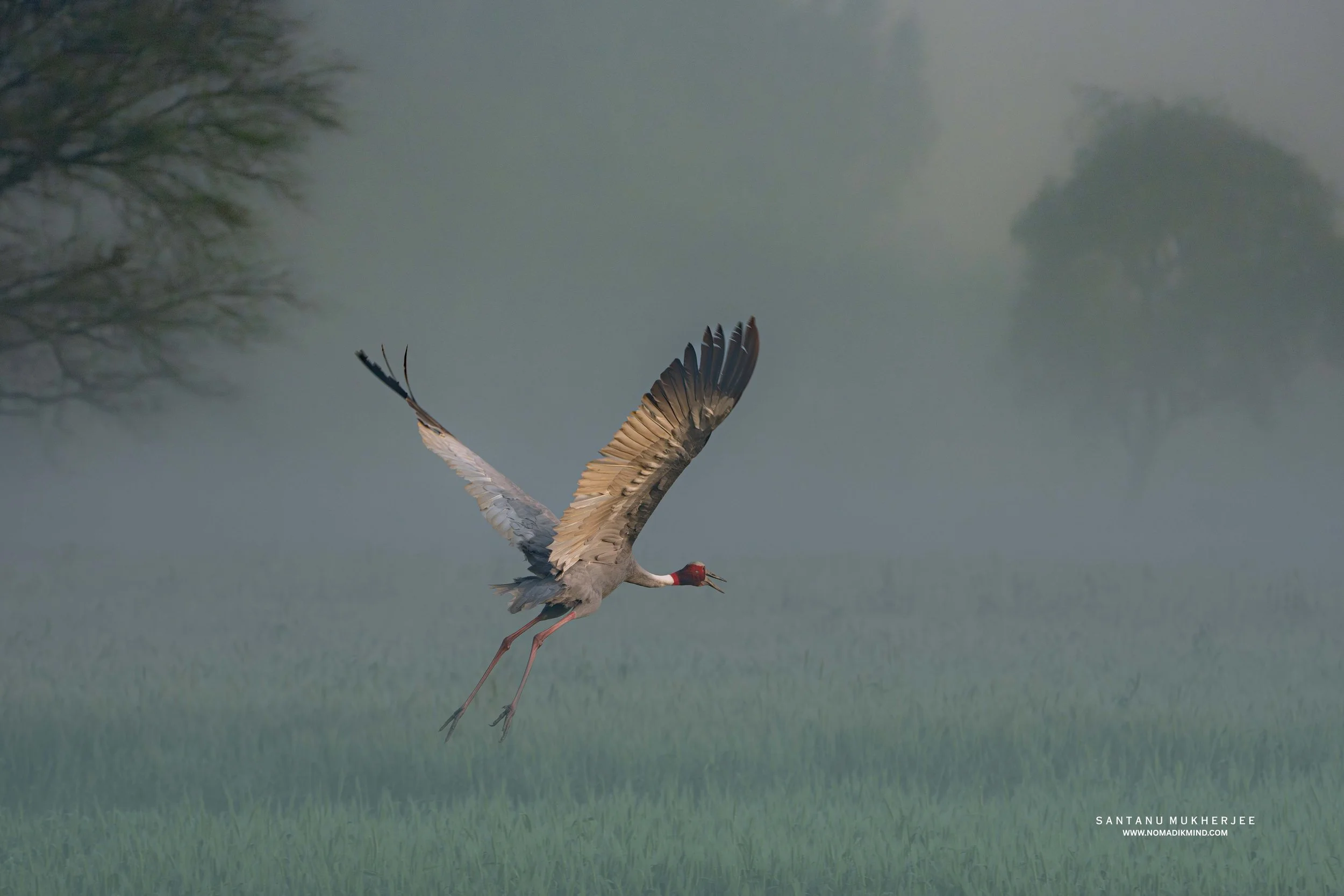
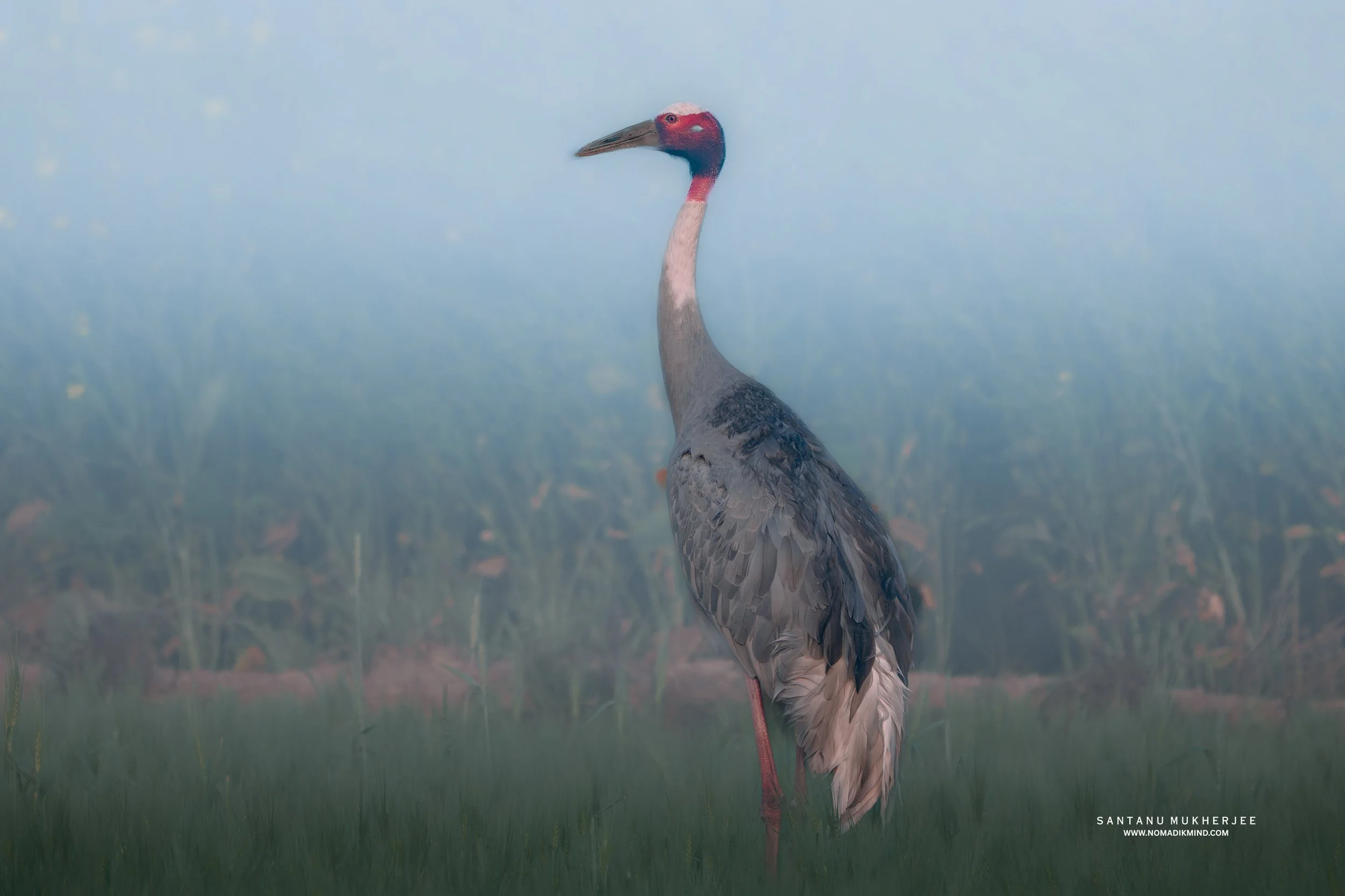
The Sarus Crane had been eluding us — wrong timing, wrong corner of the park. On the final morning, someone suggested a detour: an hour’s drive near Fatehpur Sikri, where a family had been sighted at dawn. We went on faith and an early alarm.
We found them in the midst of the mustard field, moving through it — unhurried. The crane I caught mid-flight had its bill open in mid-call, the red cap vivid against the soft green bokeh behind. There is a warmth in that frame, different from the Bharatpur photographs. Different light, different energy, different morning entirely.
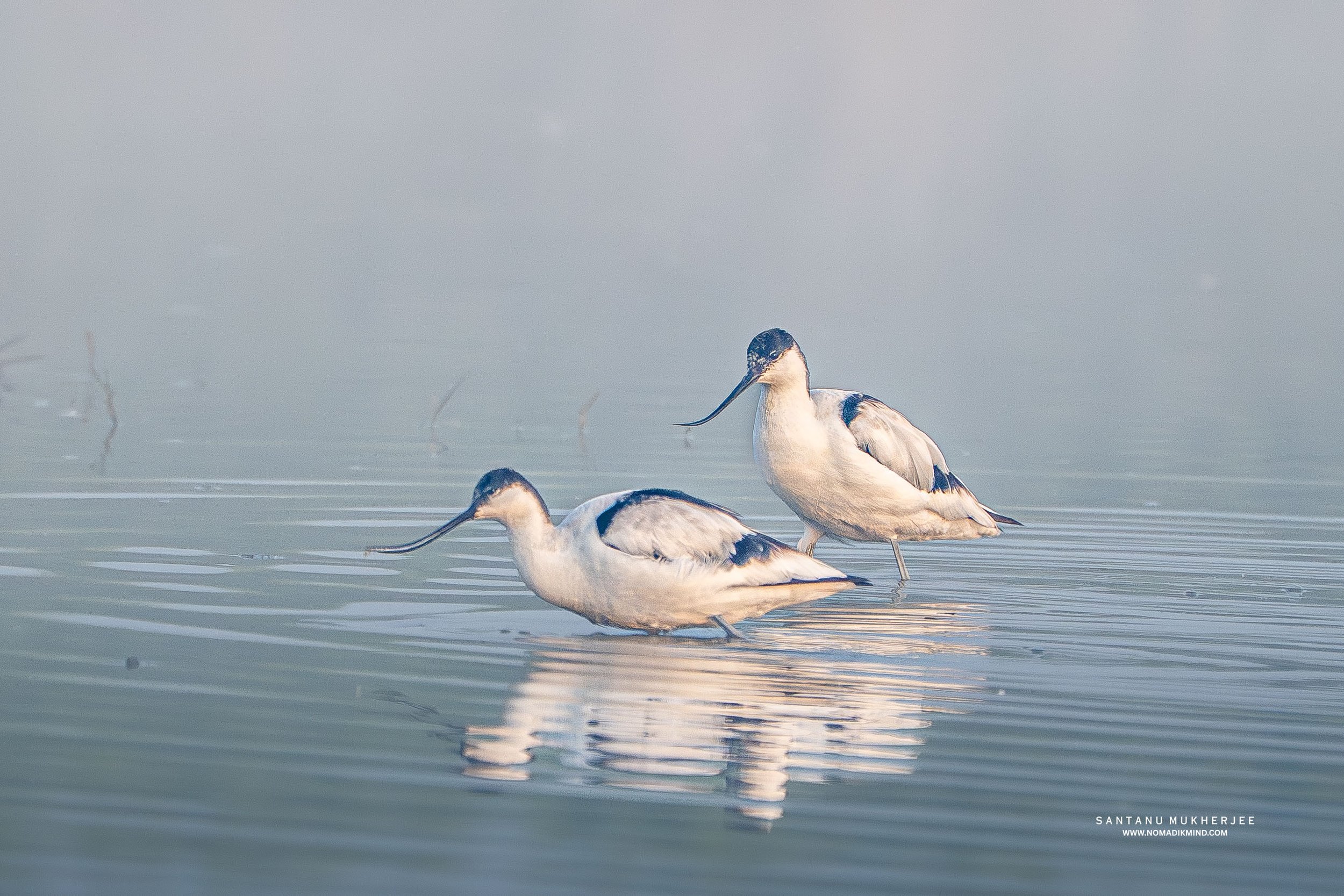
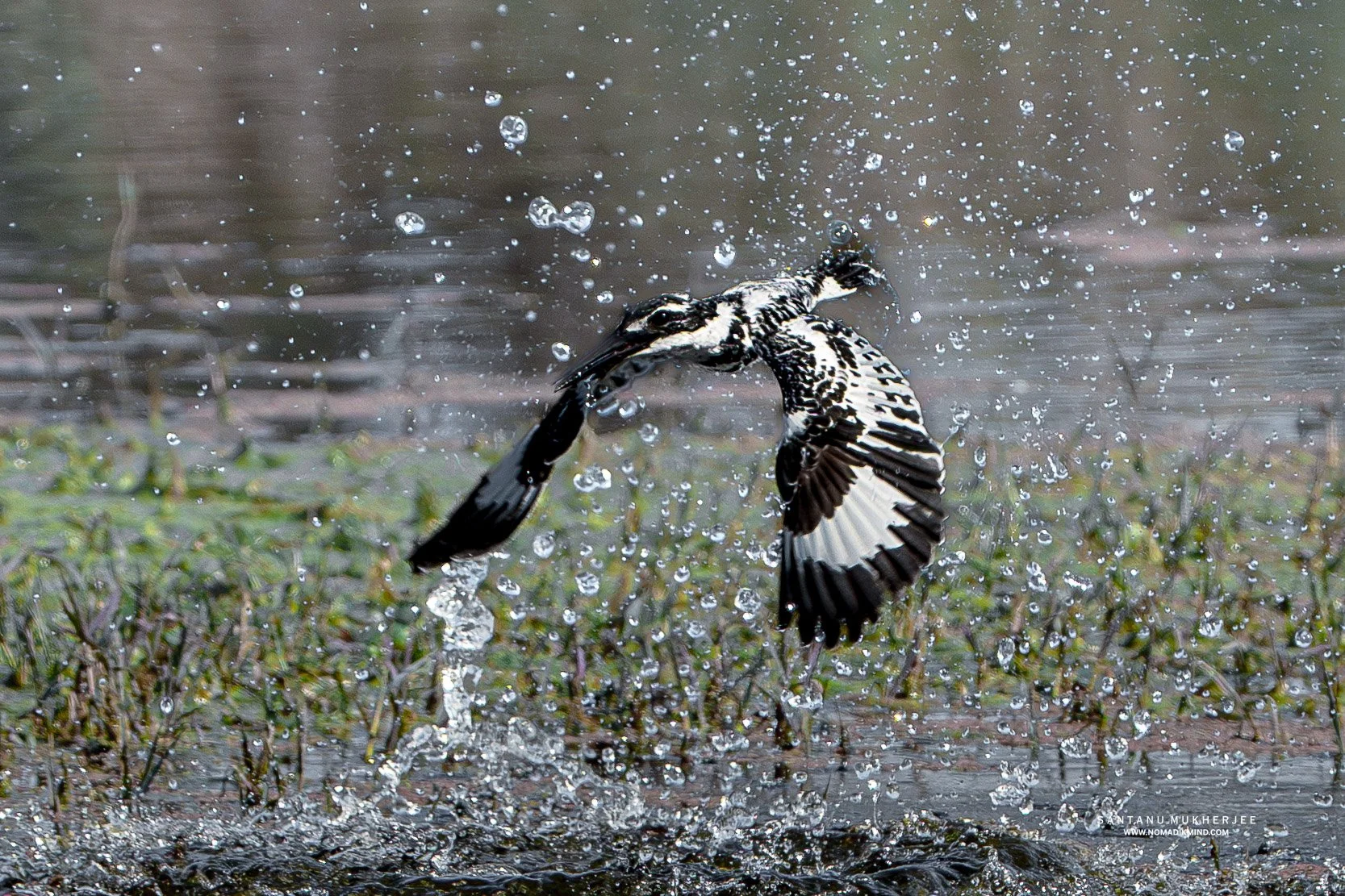
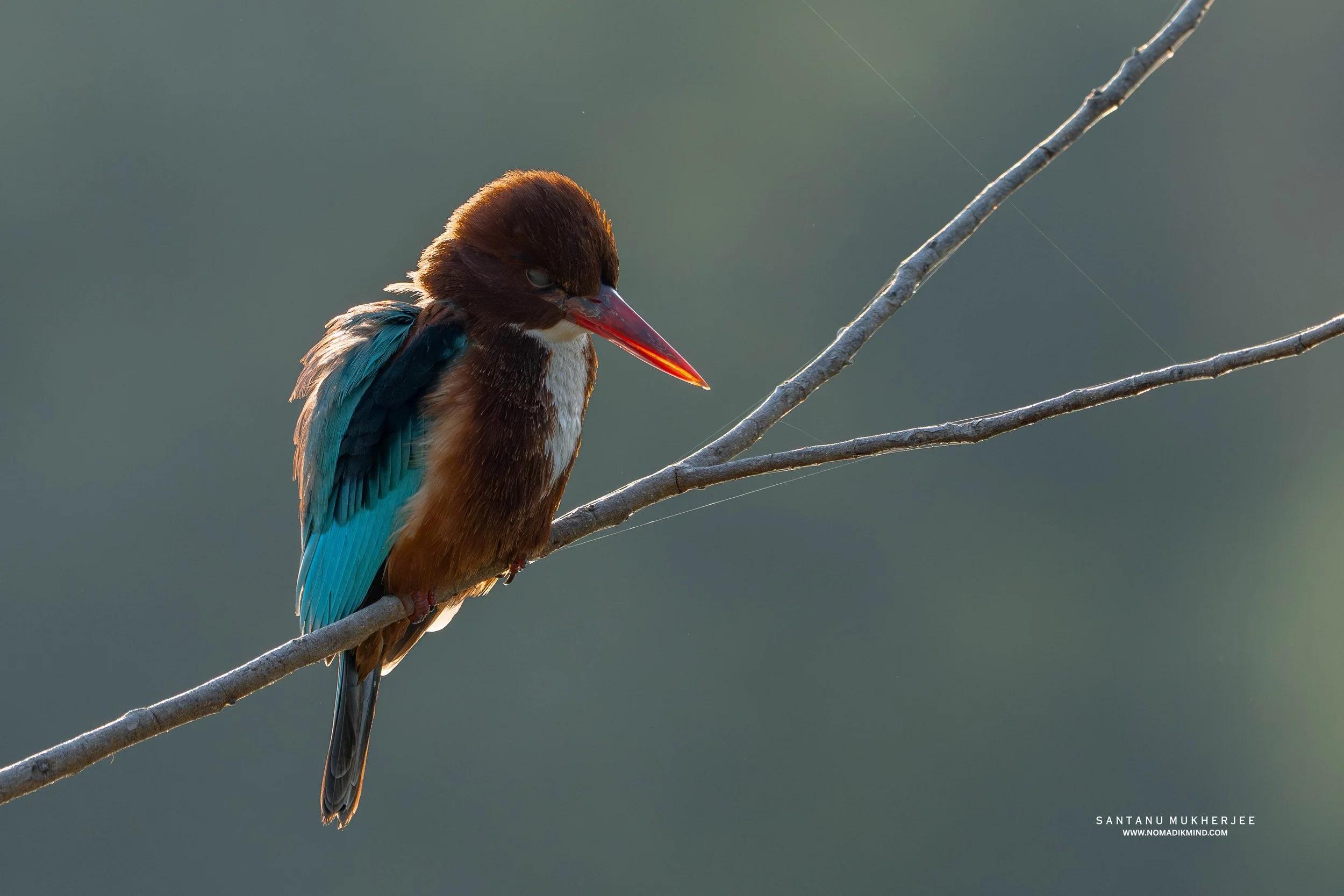
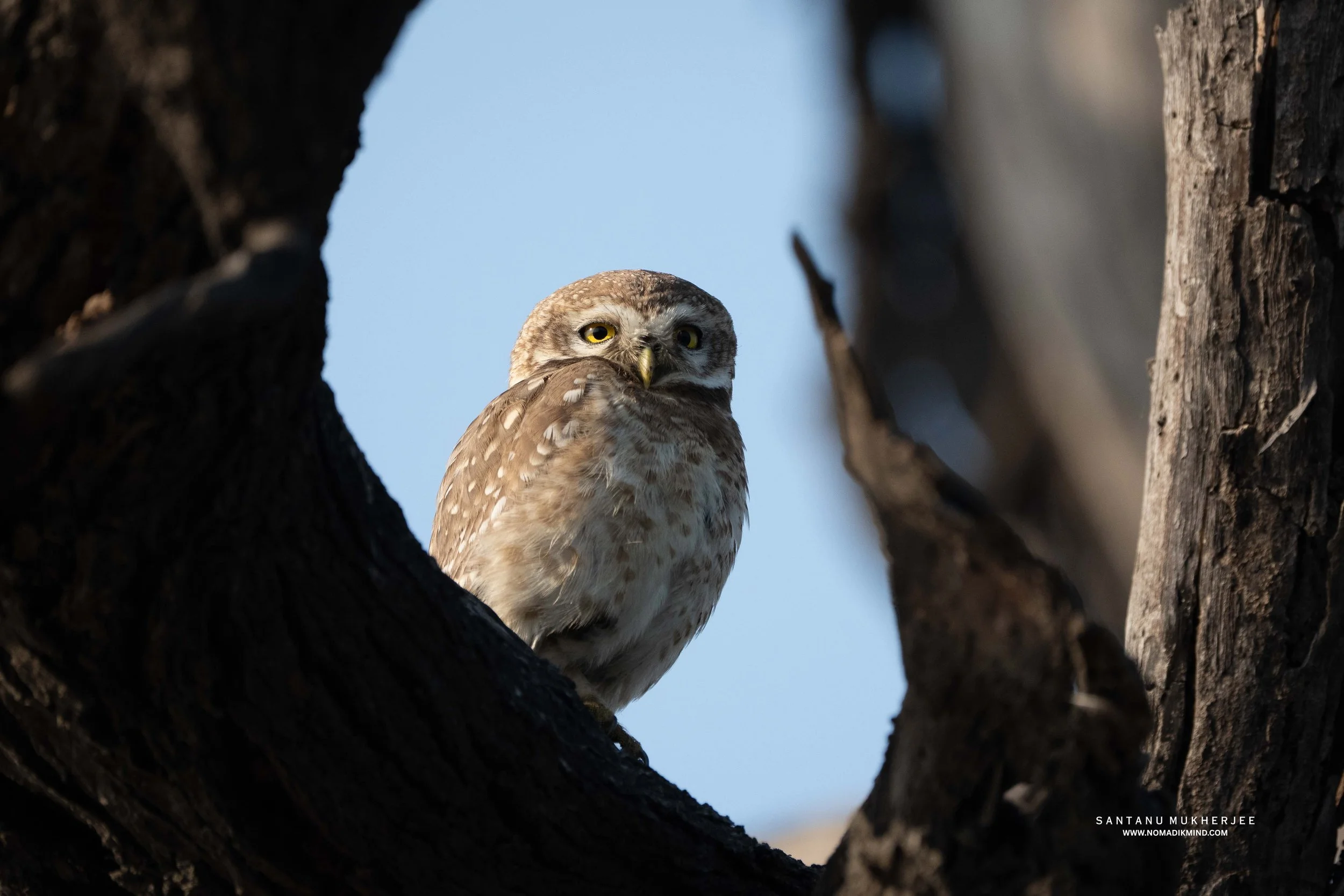
And then there were the others — the ones you don’t plan for. The pied avocet sweeping its upturned bill through the shallows. The white-breasted kingfisher on a low branch; a pied kingfisher emerging from the water mid-shake. The owl in full daylight. The duck moving her chicks through the reeds in a line so orderly it looked rehearsed. These are the pictures between the pictures, and they are often the ones that stay with you longest.
Bharatpur does not give you the drama of a tiger reserve. No kill, no charge, no predator at speed. What it gives you instead is craft — the discipline of reading light, of staying still long enough that the birds forget you’re there, of finding the picture inside the ordinary moment.
I used to sit in meetings and on business calls at this hour. Now I stand in mist, waiting for the light to change. The pace is different. But the skill — the patience to sit with incomplete information and wait for things to clarify — turns out to be the same.
Come between October and March, when the migratory birds arrive. But more than that, come with time. Because Bharatpur doesn’t just give you photographs. It teaches you how to see.
