Return to Corbett
Silhouette of a a safari vehicle against burnt orange sun, Dhikala morning mist.
Nearly five decades after my first visit, in February 2026, I found myself back in Corbett.
I was a schoolboy the first time around, travelling with a noisy group of classmates. I remember the trip, but of course, I saw the forest very differently then. Coming back after all these years was strangely emotional. Some places stay somewhere in your memory, even when you haven't thought about them for years. Corbett was one of them.
The journey into Dhikala is very much part of the experience. It was a ten-hour drive, an overnight stay at Ramnagar and then an early morning entry through Dhangarhi Gate. From there, it is another ninety minutes through some beautiful sal forest. As we drove deeper, the trees closed in around us and, gradually, the outside world seemed to disappear.
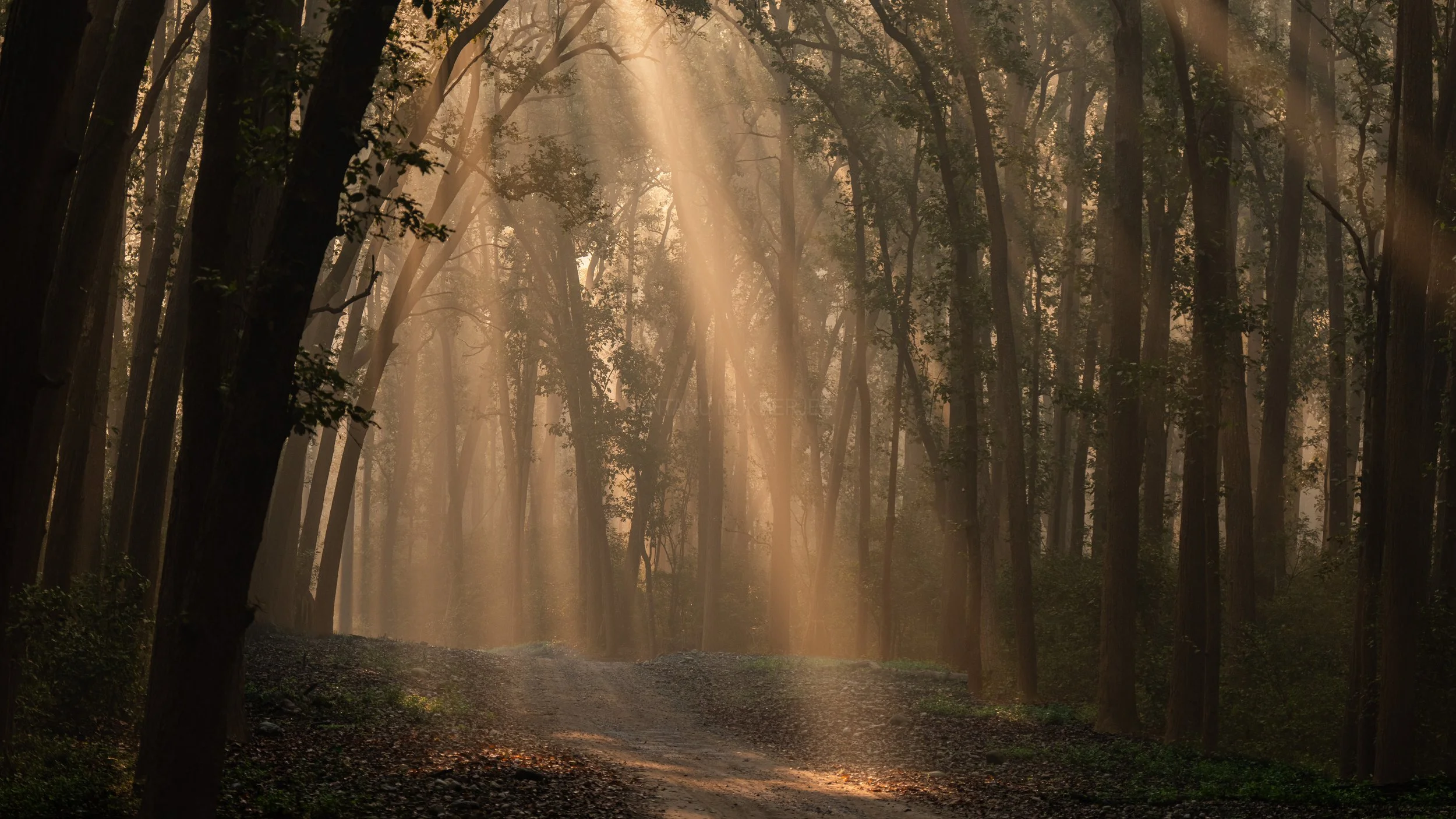
God rays breaking through the sal forest, drive in to Dhikala
And then you arrive at Dhikala.
The accommodation is basic, the food is simple and there is very little in the way of luxury. But none of that really matters. Step out onto the wooden parapet and the view makes you forget everything else. The Ramganga reservoir stretches out in front, with the Kanda ridge disappearing into the morning haze. It is one of those views where you instinctively stop talking and just look.
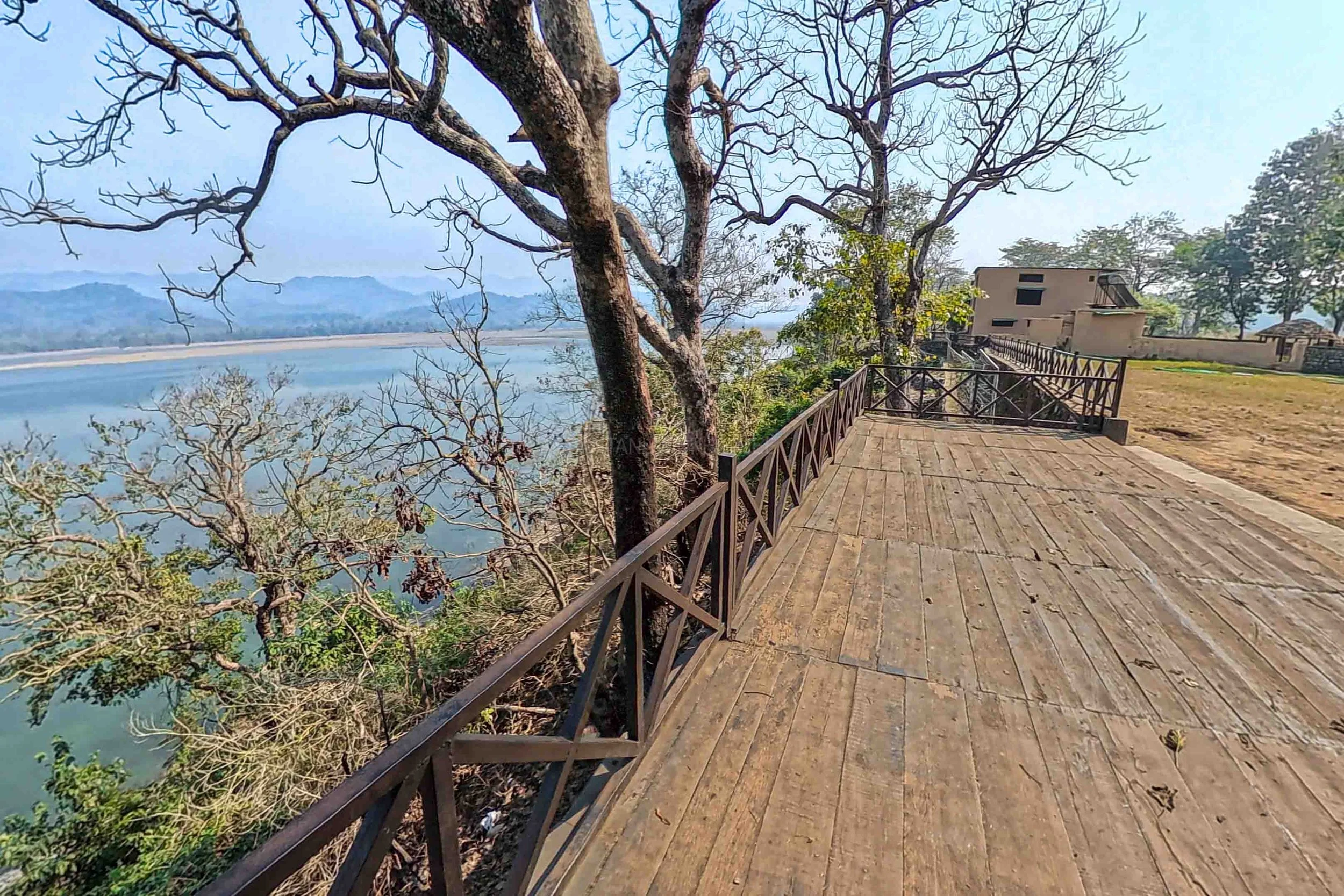
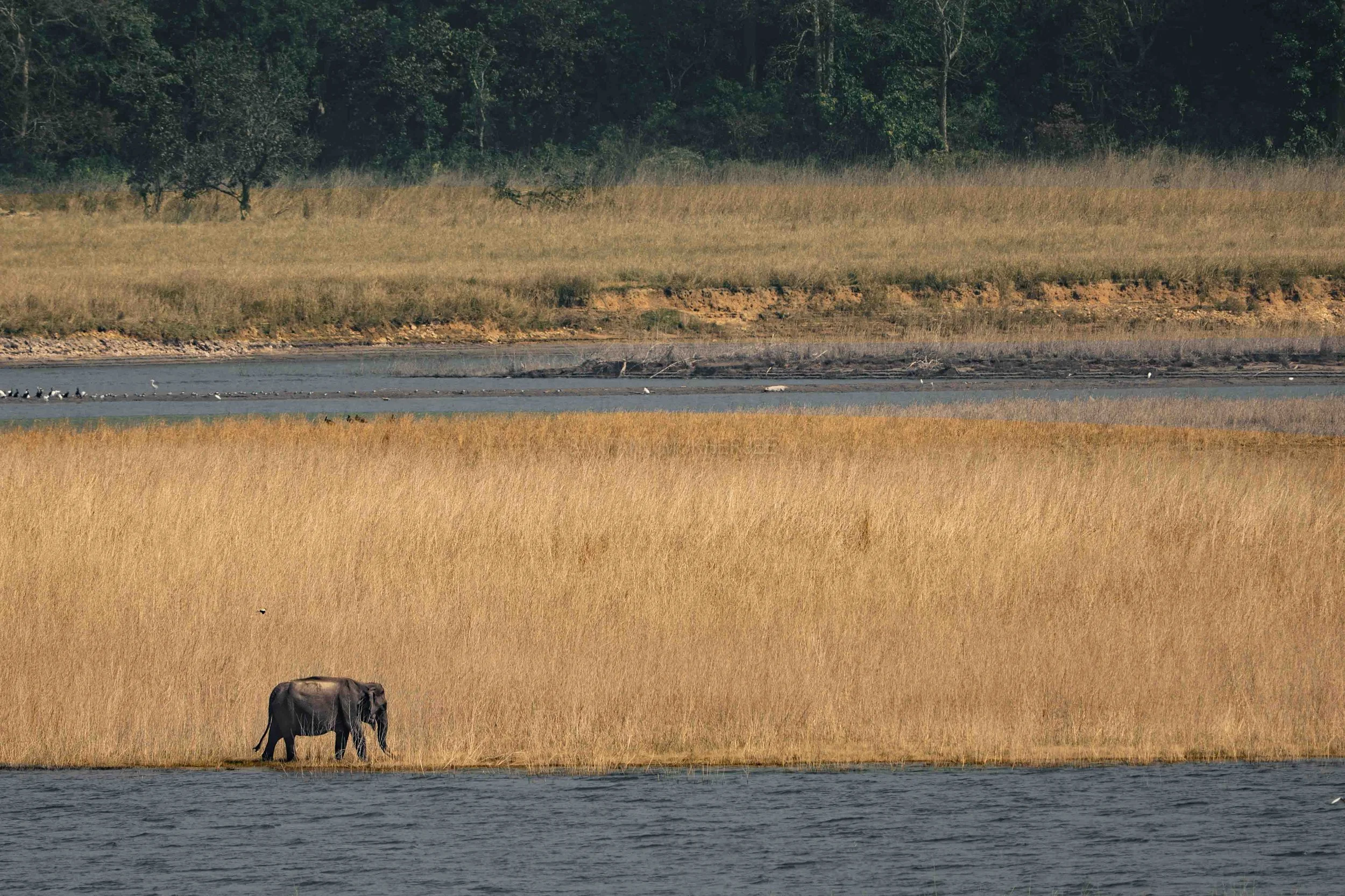
The Ramganga more or less divides the Dhikala landscape into two territories. Paarwali has established herself around the grasslands and river edges, while Perwali is more often seen around the forest tracks and riverine areas on the other side.
Seeing one tiger would have been enough. Getting to spend time with both was something I hadn't expected.
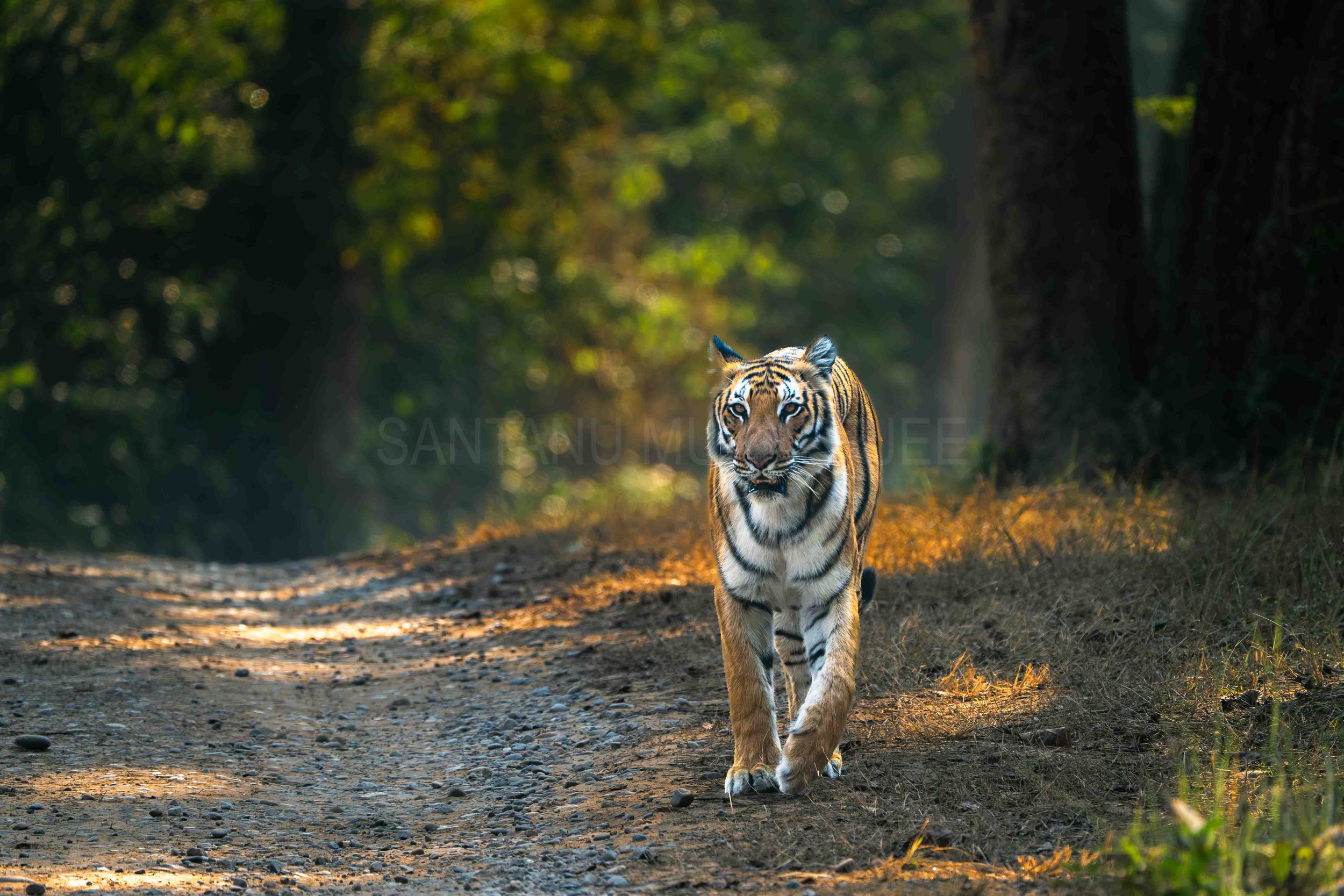
Our first afternoon took us into Perwali's territory. The forest was dense, with patches of sunlight filtering through the sal trees. Suddenly, the naturalist raised his hand.
There she was.
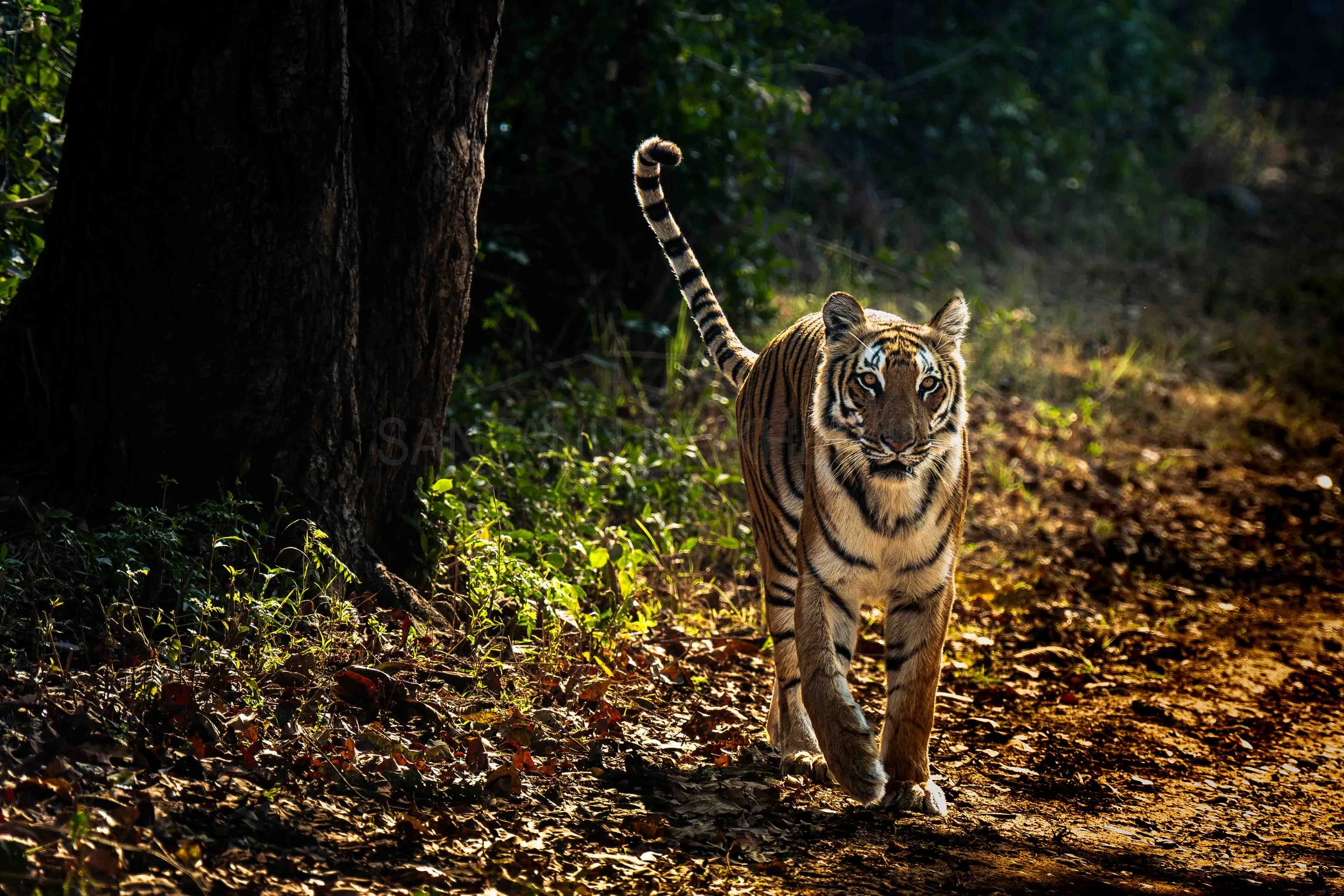
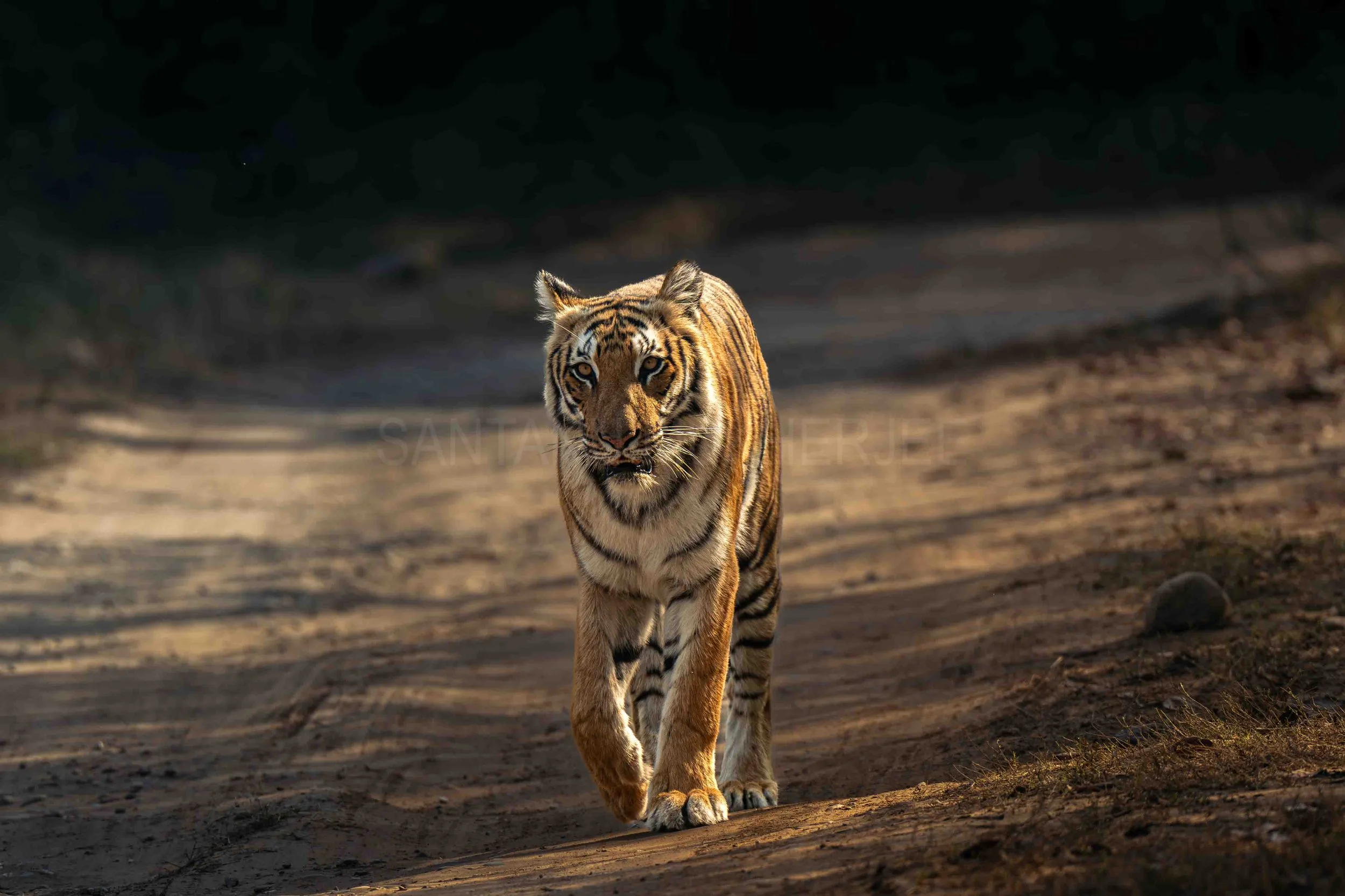
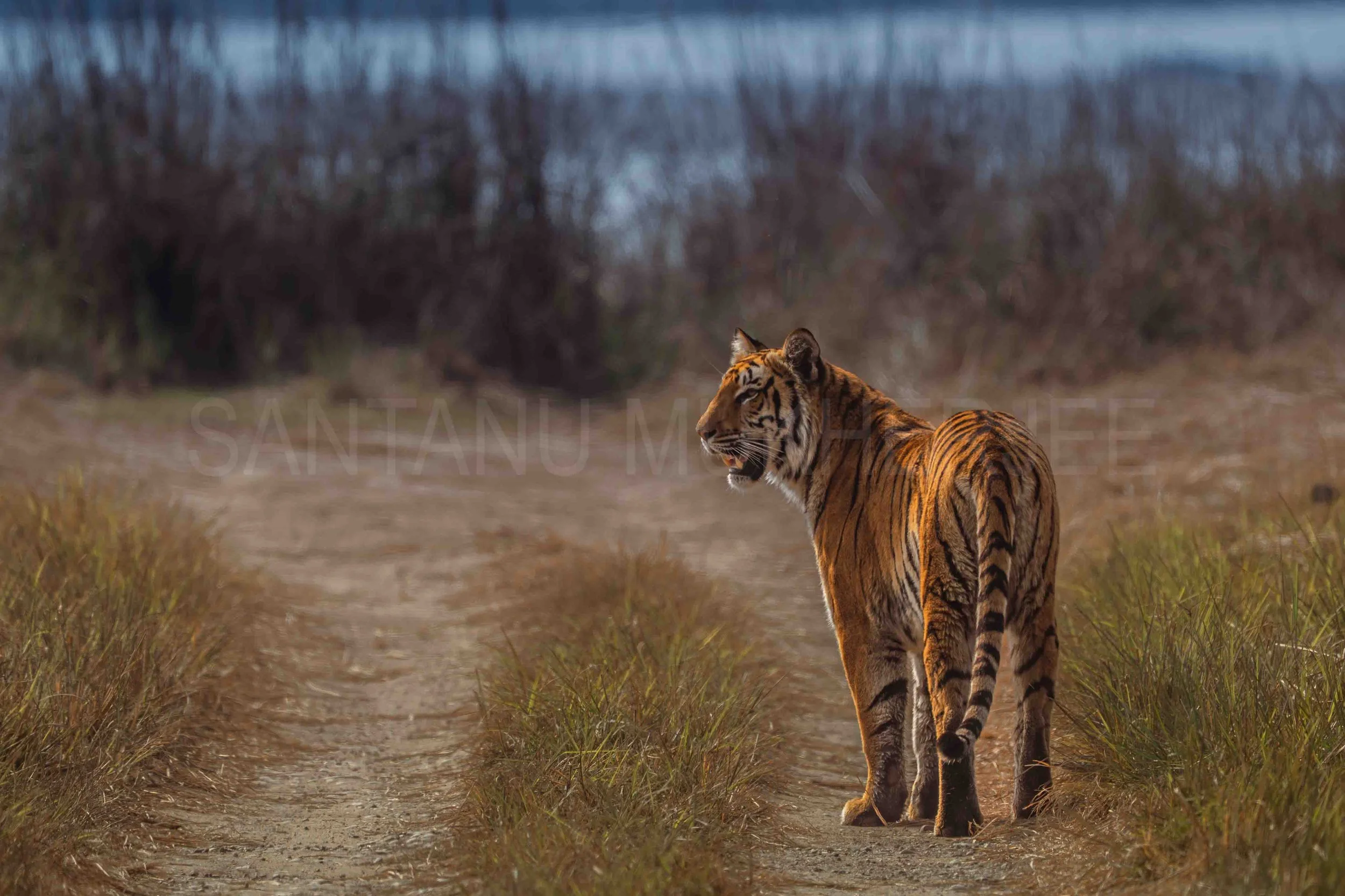
Perwali was walking towards us along the track, completely unhurried and seemingly unconcerned about the jeep. She came closer, looked in our direction for a while, stayed with us - giving us enough time to take a few quick shots and then disappeared into the undergrowth.
It was a wonderful sighting, but what I enjoyed most was the fact that she was completely on her own terms. There was no drama, no rush. We were simply there while she went about her business.
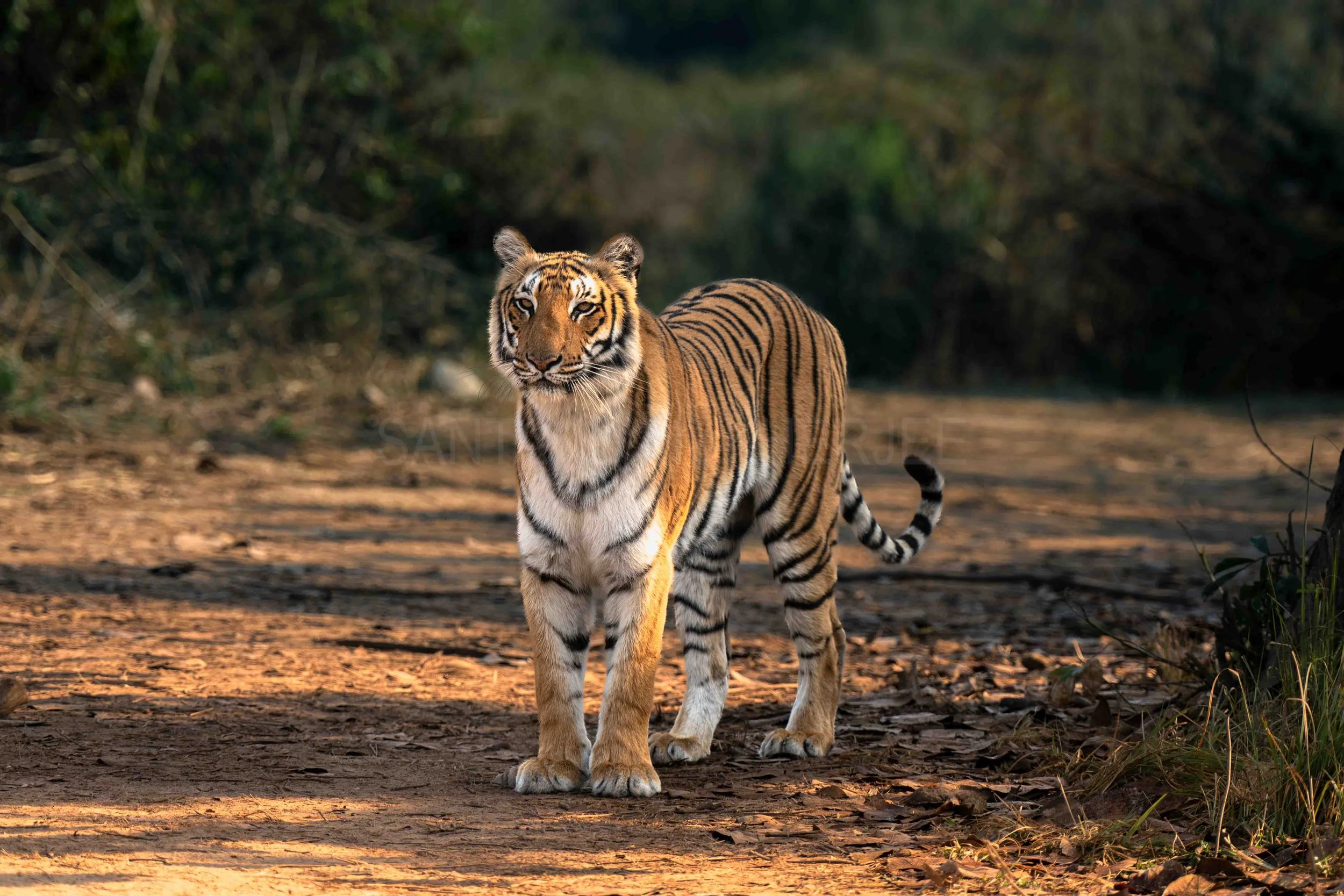
The February mornings at Dhikala are another experience altogether.
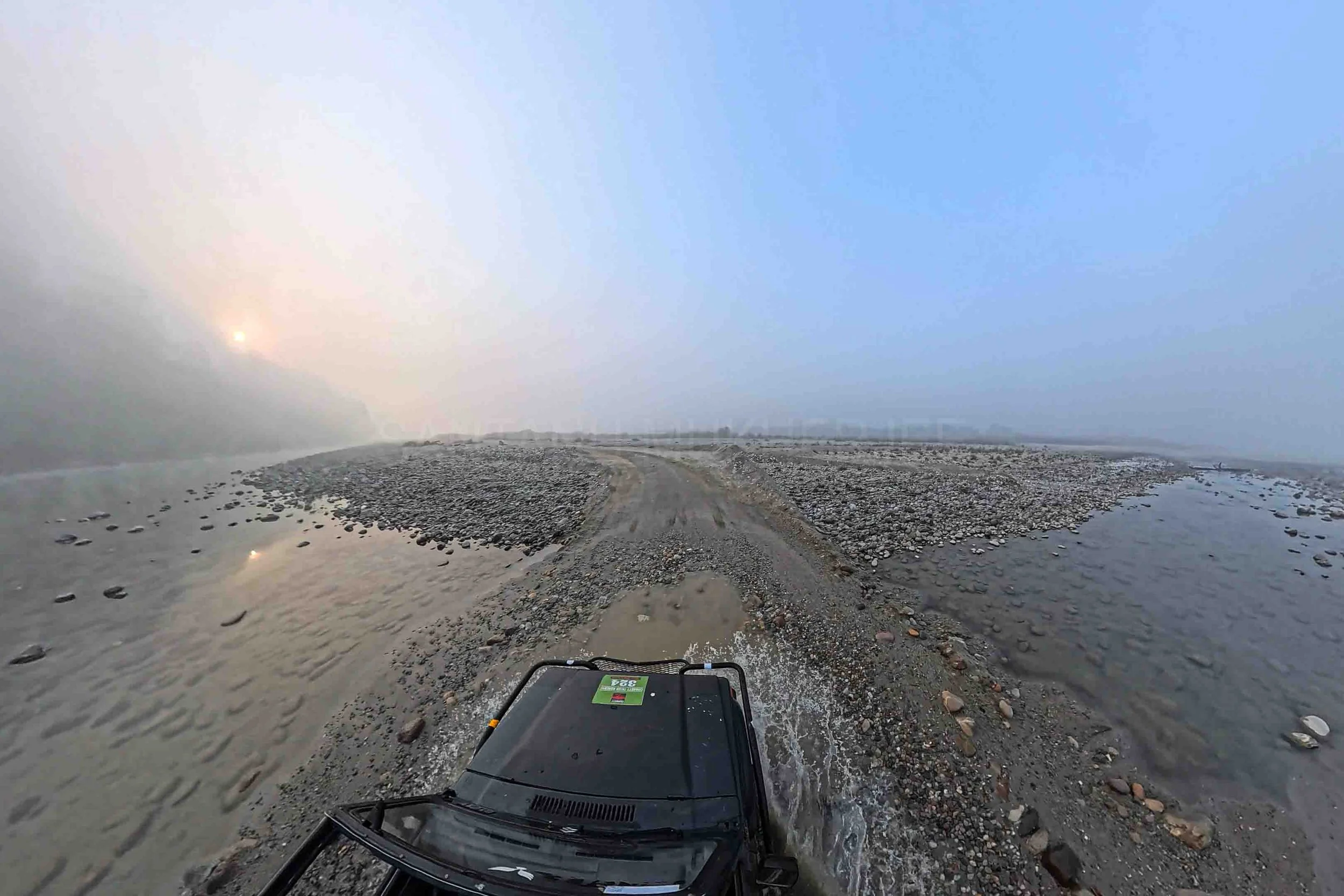
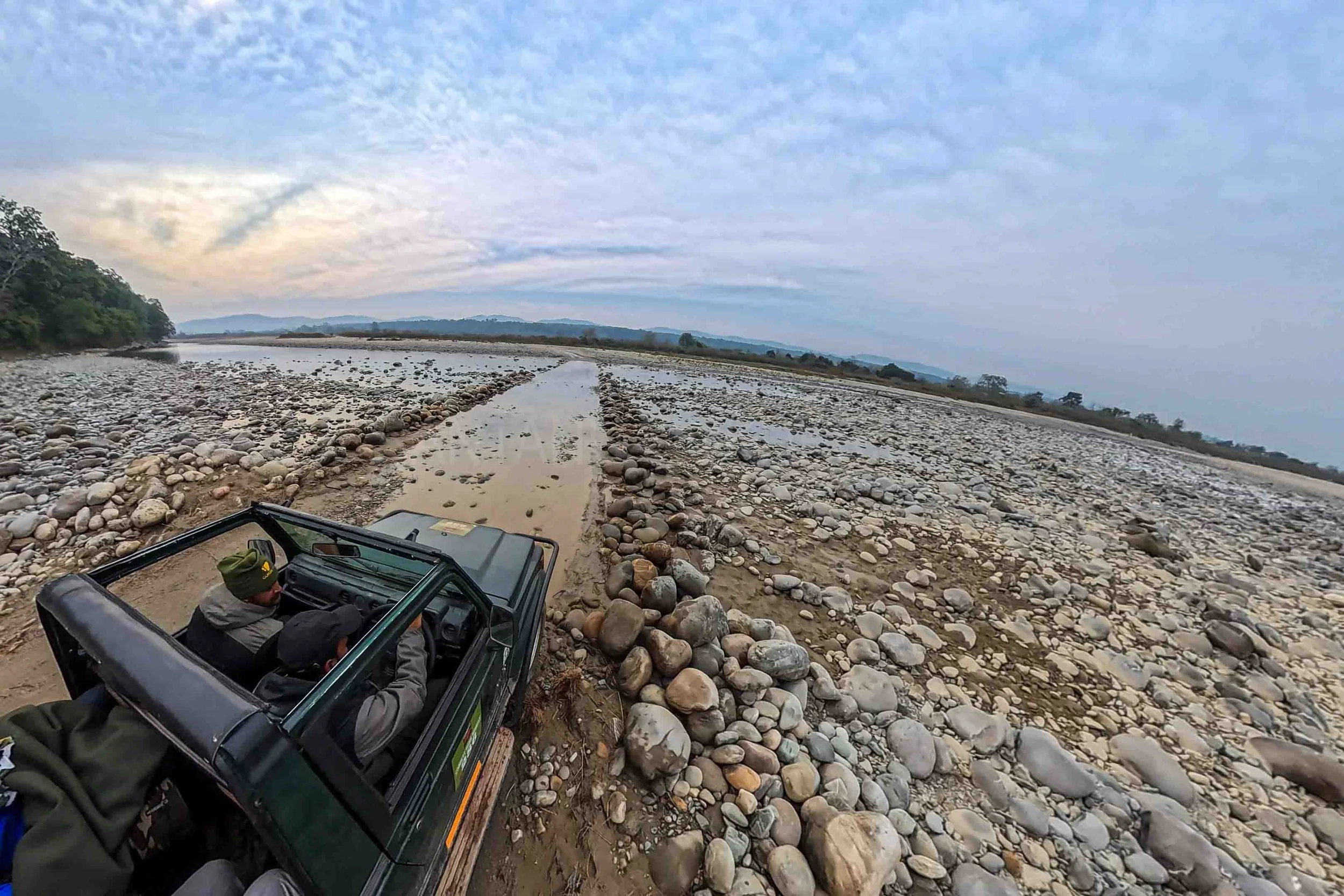
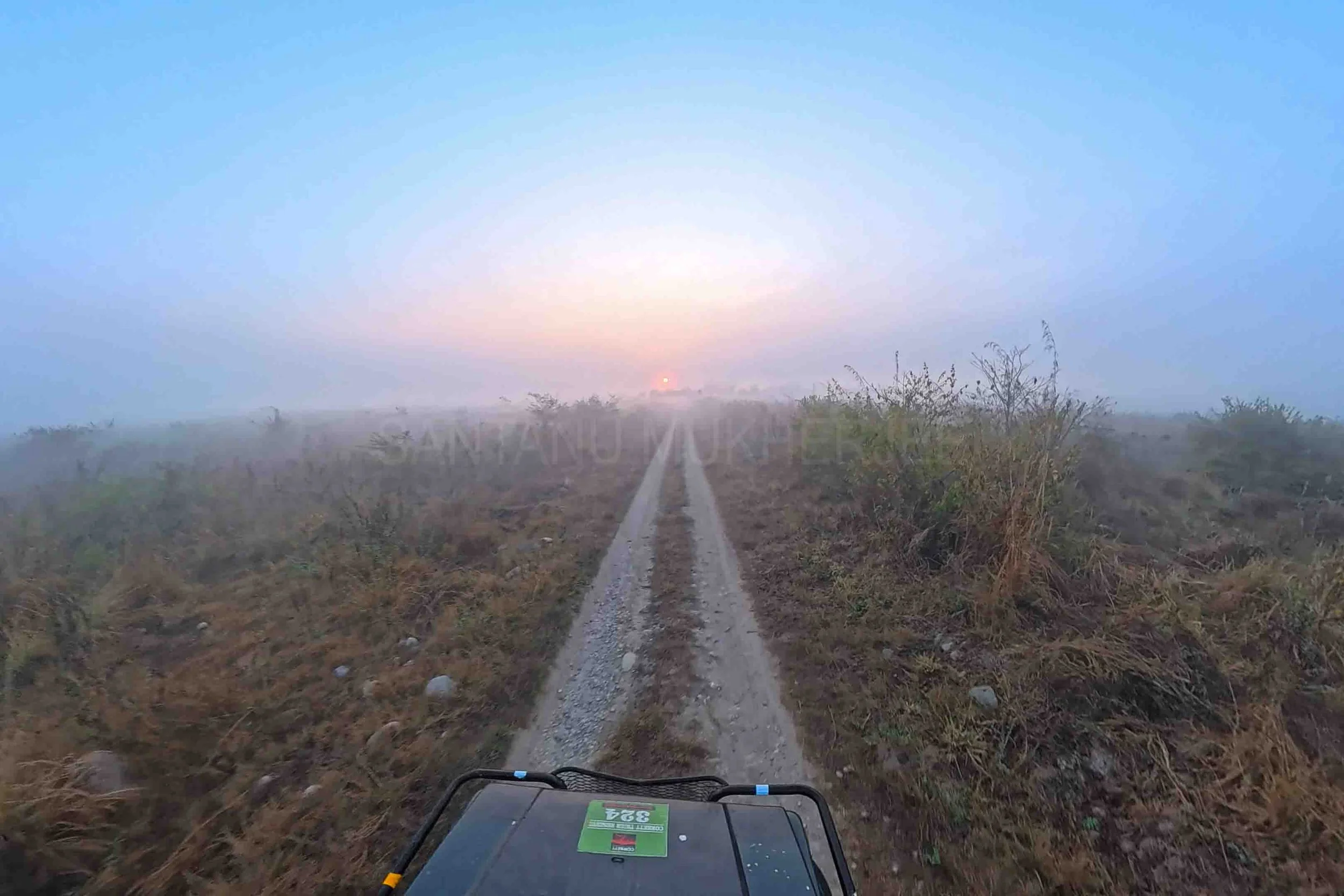
The alarm goes off before 5:30. It is properly cold — the kind of cold that somehow finds its way through whatever you are wearing. We crossed the Ramganga in near darkness, with mist so thick that for a while the opposite bank simply disappeared.
Then, slowly, the mist began to lift.
The chaur appeared, the golden grass catching the first light, and the Kanda hills gradually emerged in the background. It was freezing, but those are the moments that make getting out of bed at an unearthly hour worthwhile.
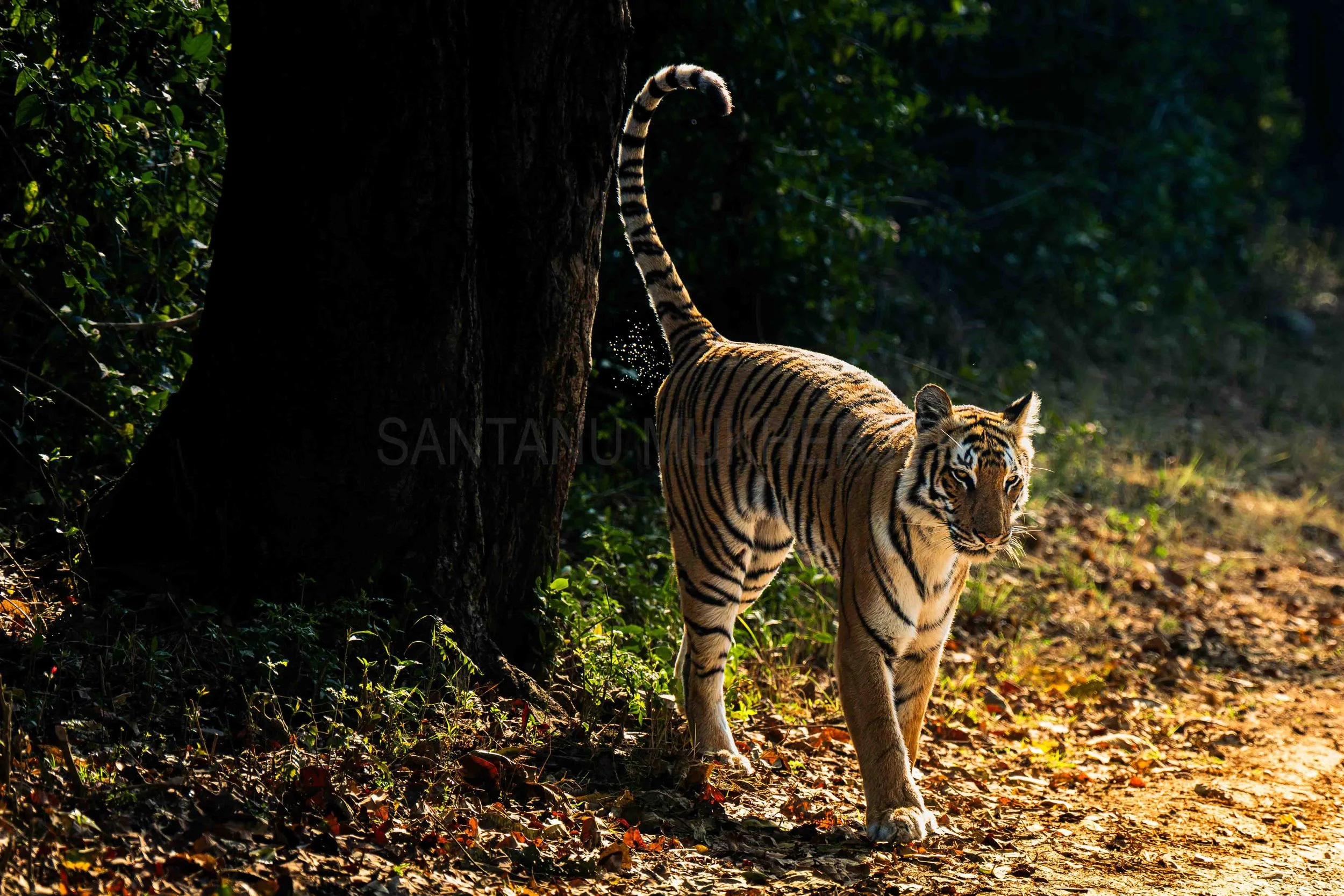
It was on one of these mornings that we again found Perwali.
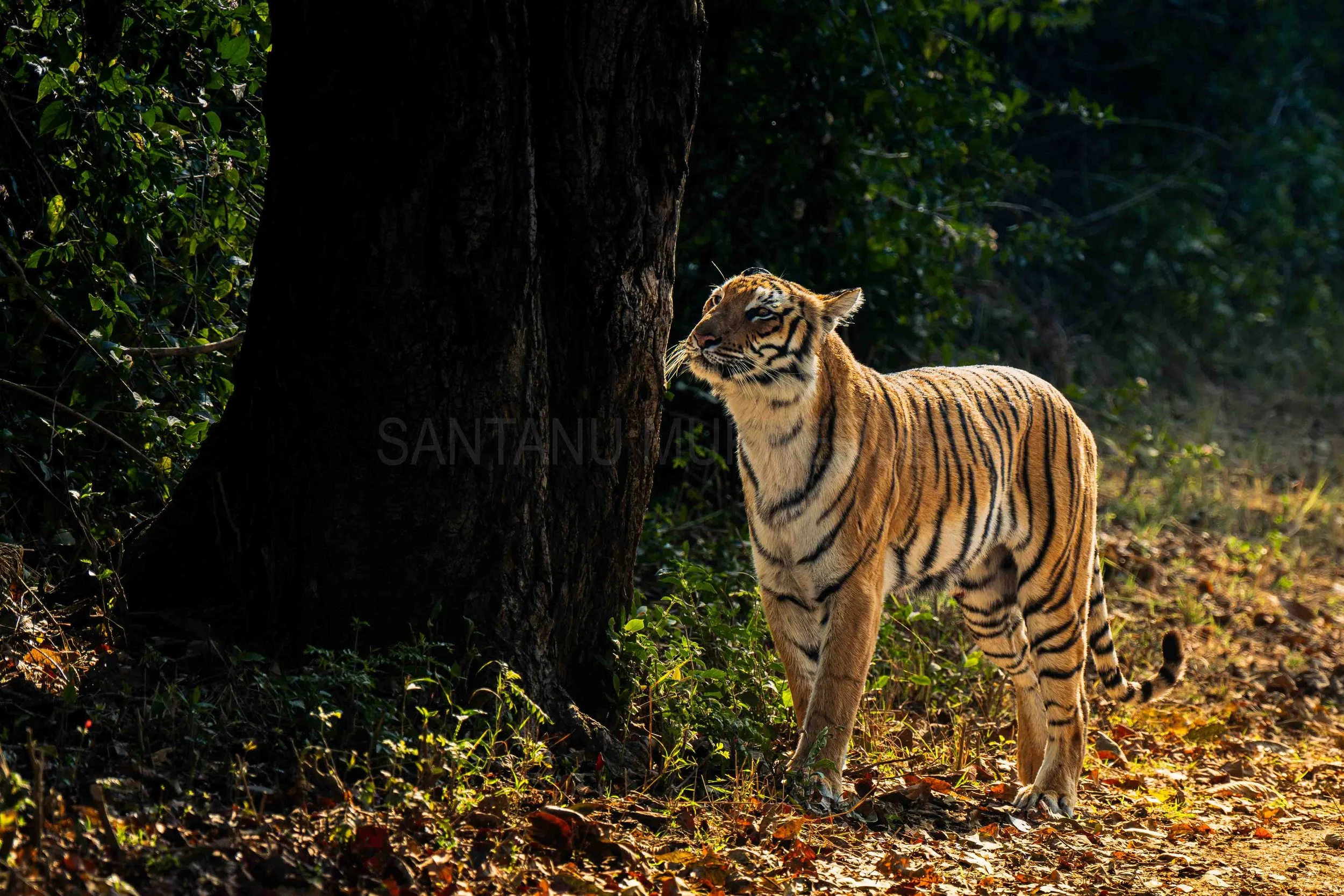
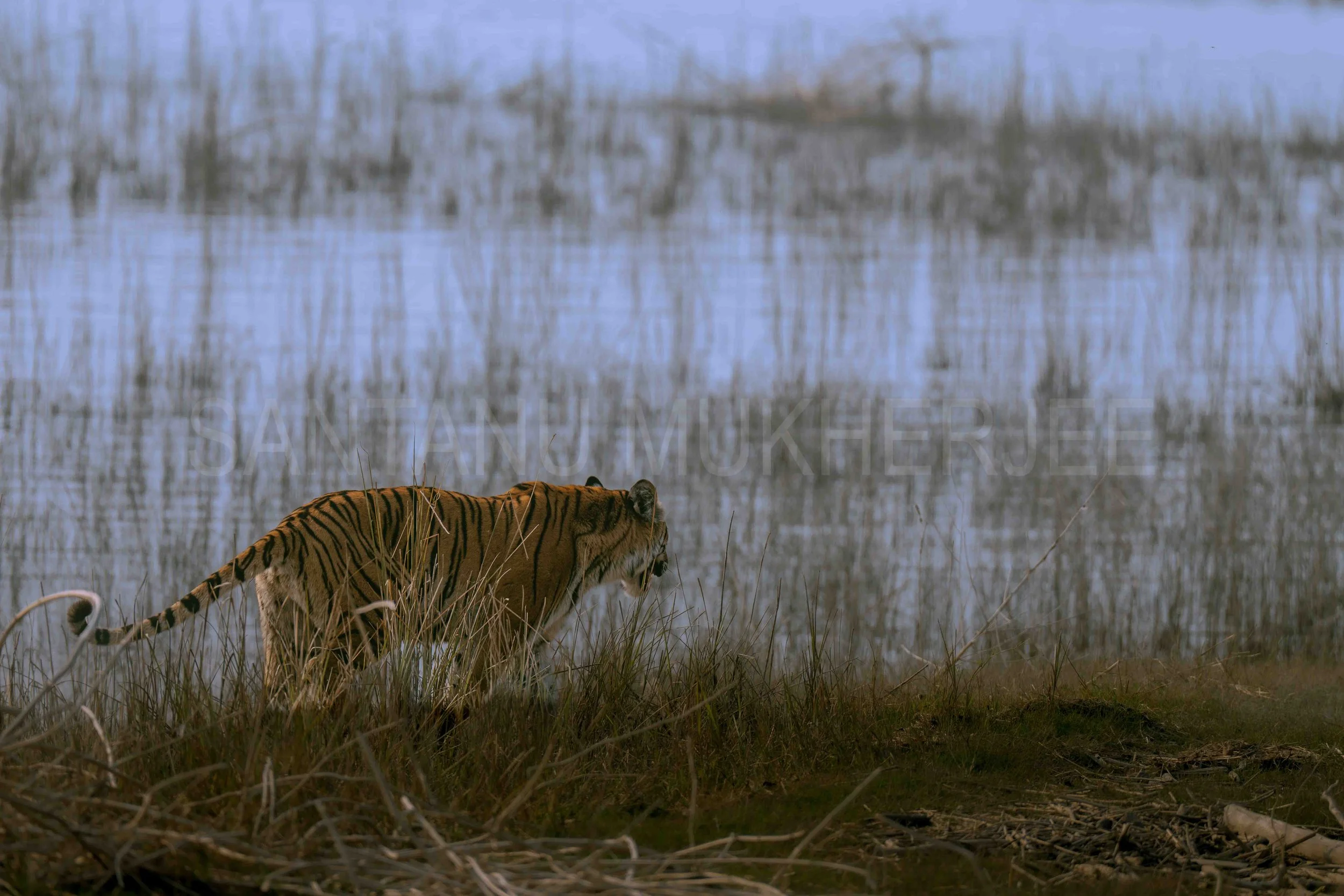
What followed was one of those sequences that wildlife photographers hope for. She stopped and began marking her territory. The tail went up, she paused, sprayed and then slowly walked away, occasionally looking back.
I managed to capture the sequence in four frames. Looking at them later, they tell the story far better than any single photograph could.
But Corbett wasn't just about tigers.
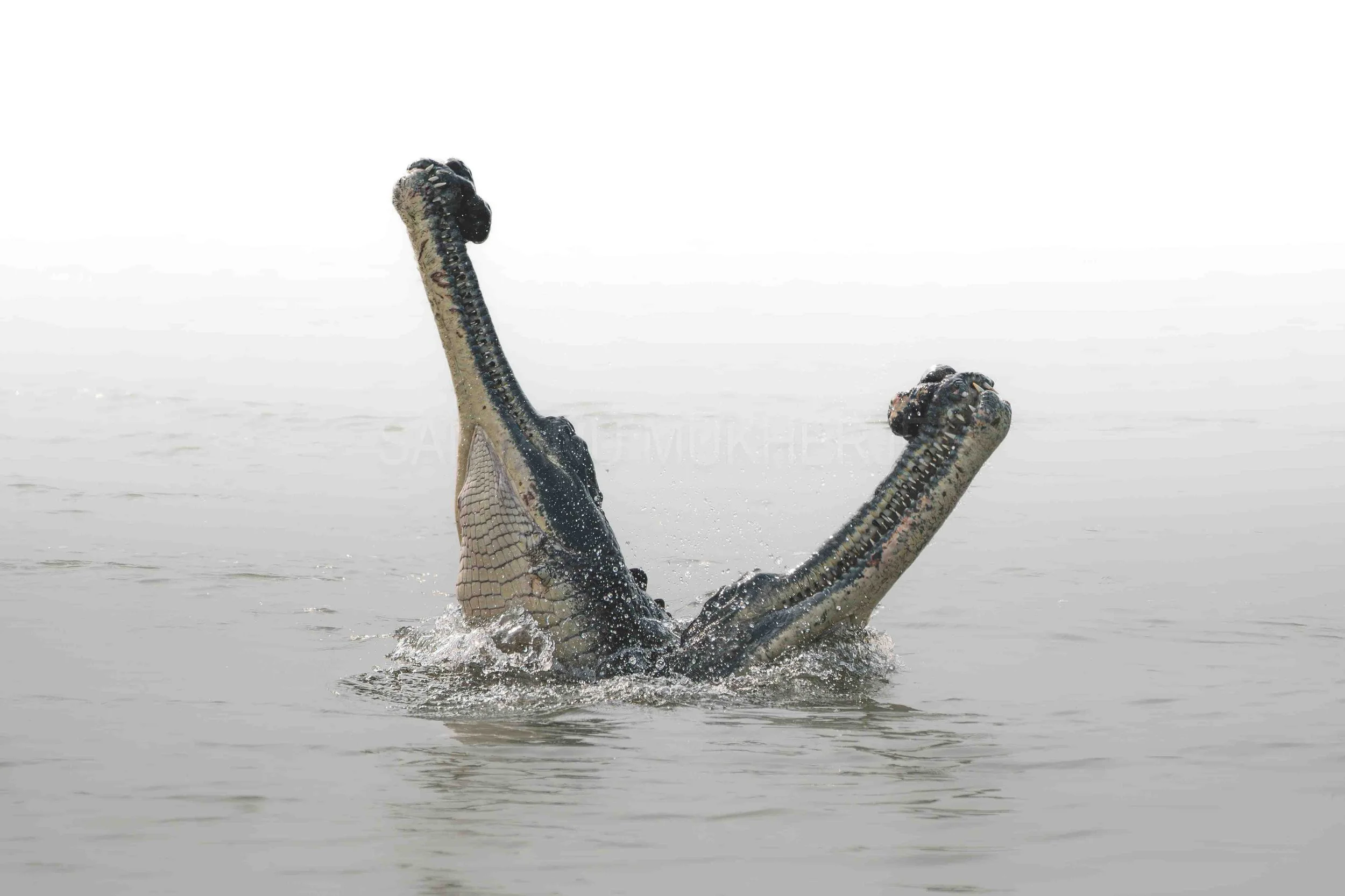
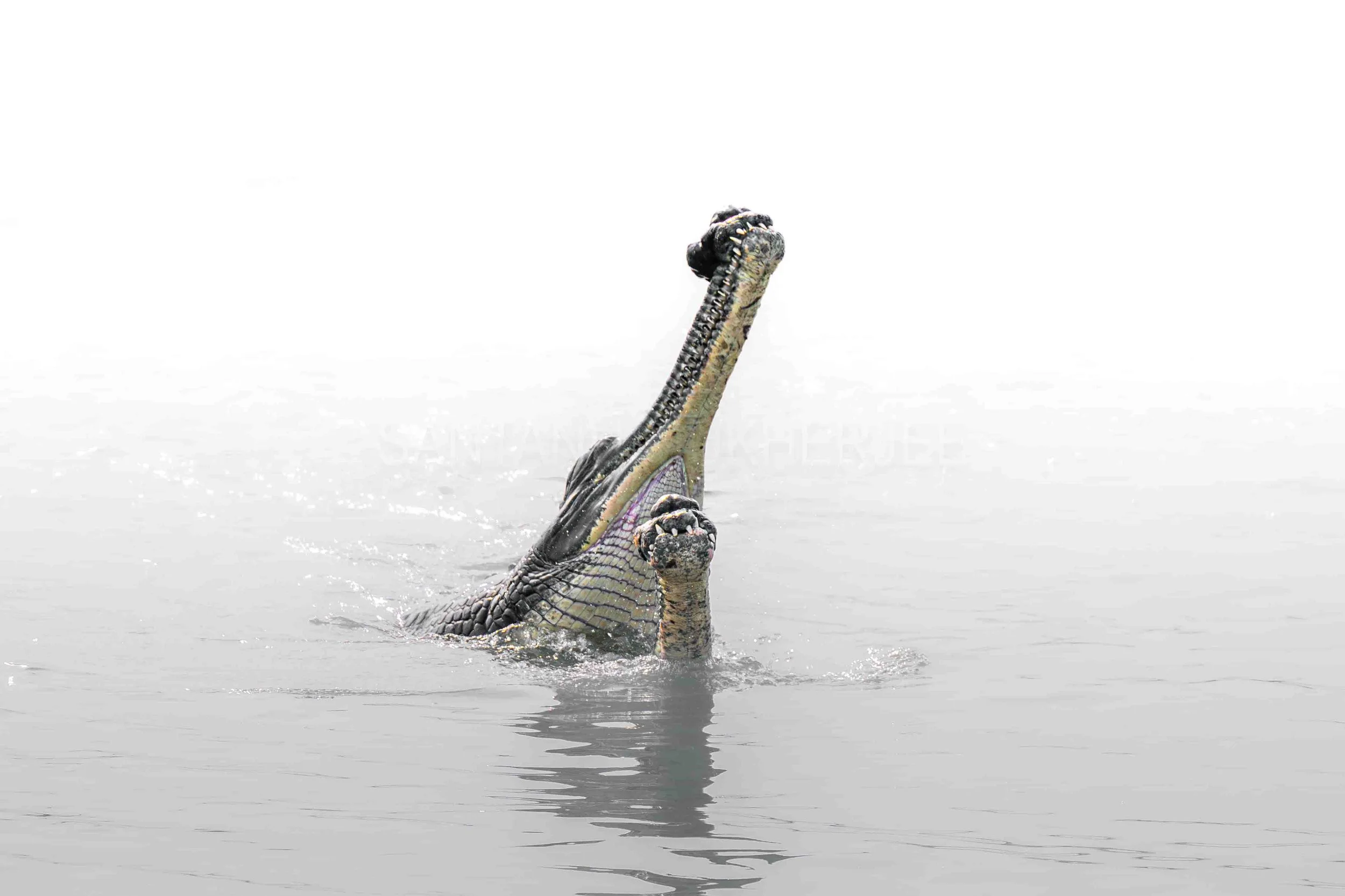
One morning, we came across two gharials in the Ramganga, and they were not simply basking on a sandbank. They were fighting.
Their long jaws were locked together as they pushed and twisted in the shallow water. It was a strange and fascinating sight — almost prehistoric. Seeing a gharial is always special; seeing two involved in what appeared to be a territorial battle was something I certainly hadn't expected.
Even our naturalist became unusually quiet. We photographed them until they finally separated, and then just sat there for a while, taking in what we had witnessed.
The elephants were another story.
In winter, most of the larger herds tend to remain in the hills, so we weren't expecting large gatherings. But the forest still gave us a few encounters.
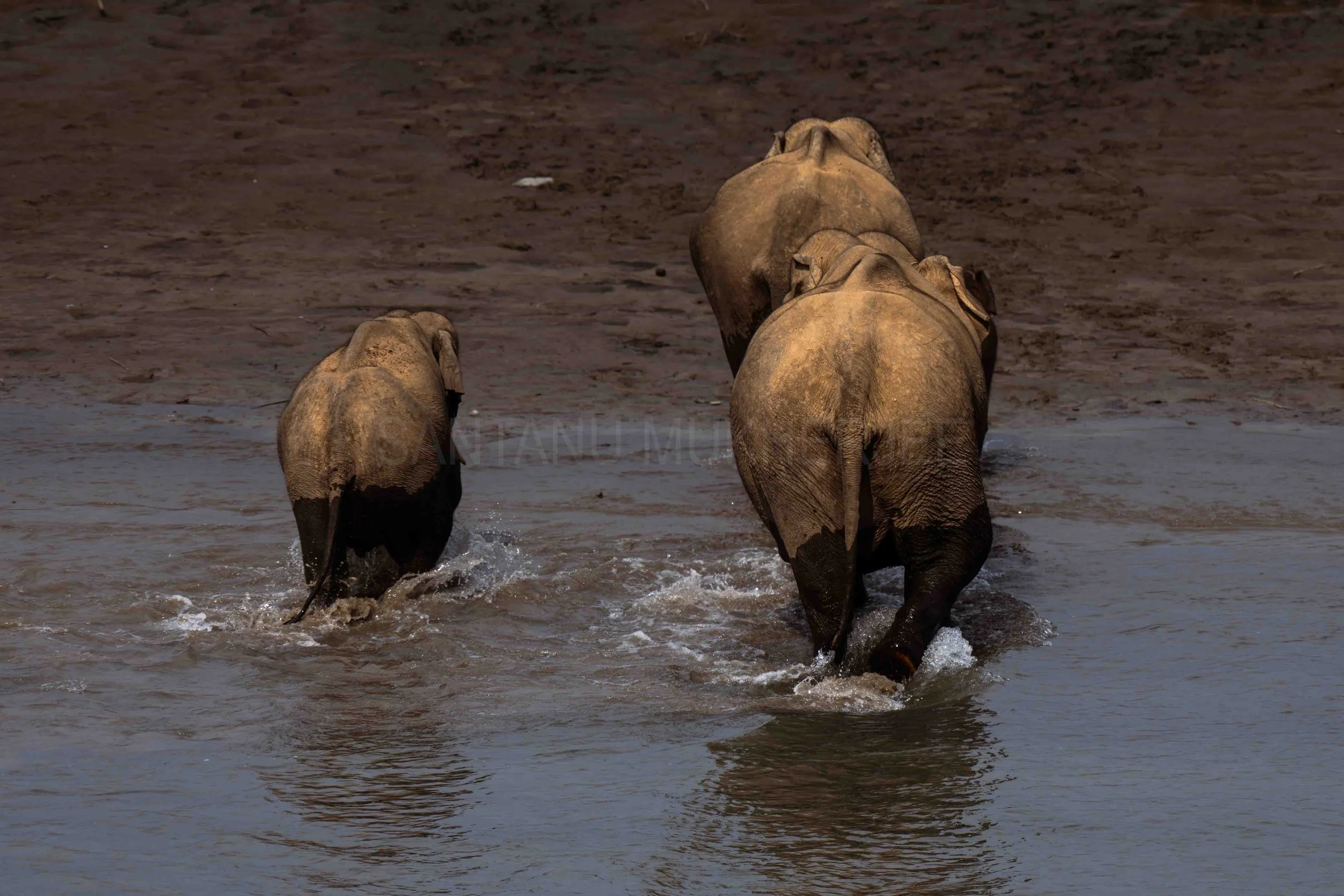
One evening, a lone elephant appeared on the far bank, grazing among the golden grass. On another occasion, we came across a a family crossing the river, the calf staying close to its mother.
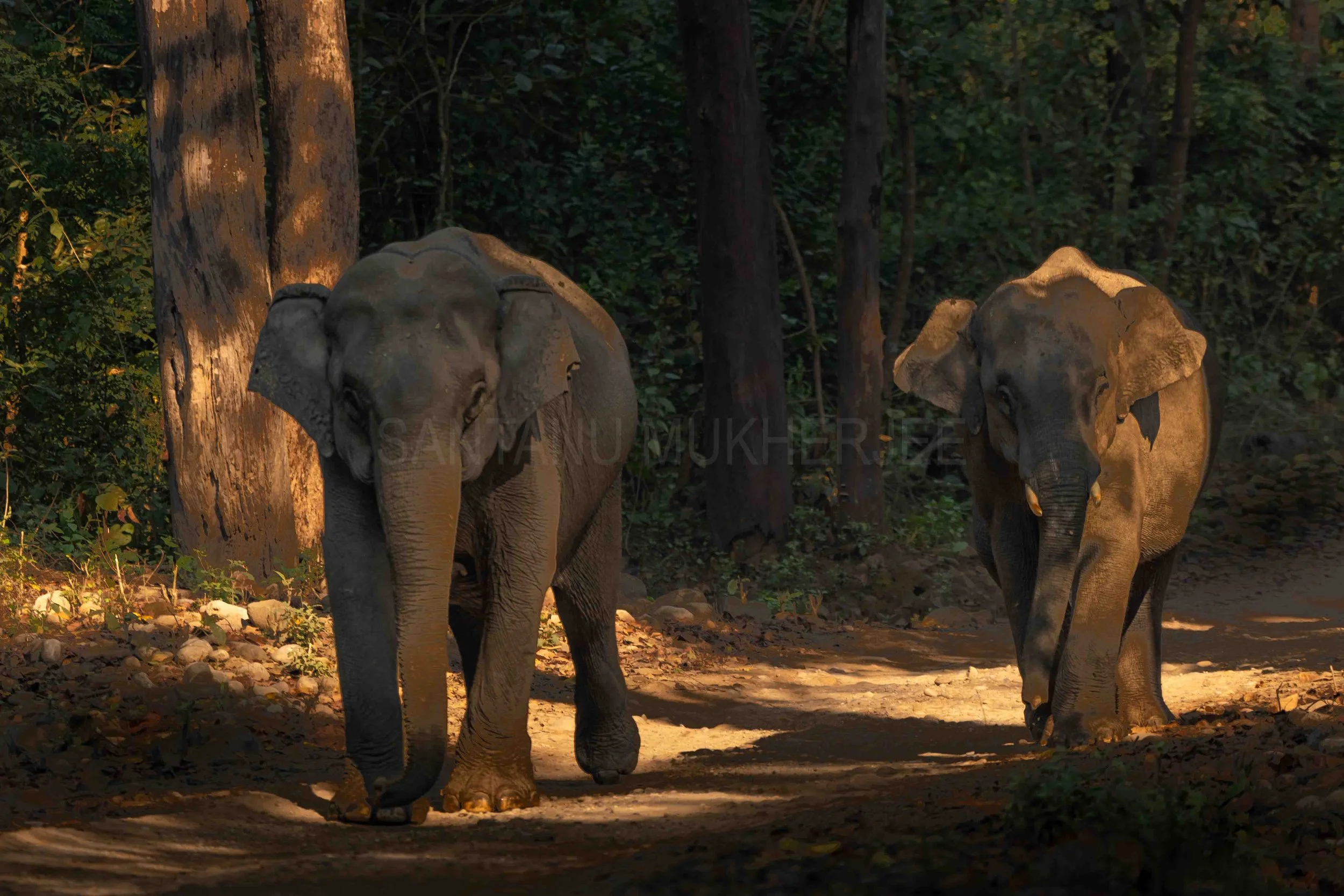
Later, couple of elephants crossed the forest track in front of us - they barely seemed to notice the jeeps. Although we kept safe distance.
I would love to return to Dhikala in April or May, when the elephant herds come down from the hills. That must be a very different experience.
One thing I have learnt from wildlife photography is that seeing an animal and photographing it well are two very different things.
A tourist may pass a likely spot and move on. As a photographer, I am often tempted to stop, study the surroundings and wait. Sometimes for an hour or for much longer.
The forest doesn't always reward you. But when it does, the wait suddenly makes sense.
One morning, we stopped at the edge of the Dhikala chaur. The landscape was almost more impressive than anything we had seen so far — golden grass stretching towards the river, the Ramganga glinting in the distance and the Kanda hills fading into the mist.
Other jeeps came and went.
We stayed.
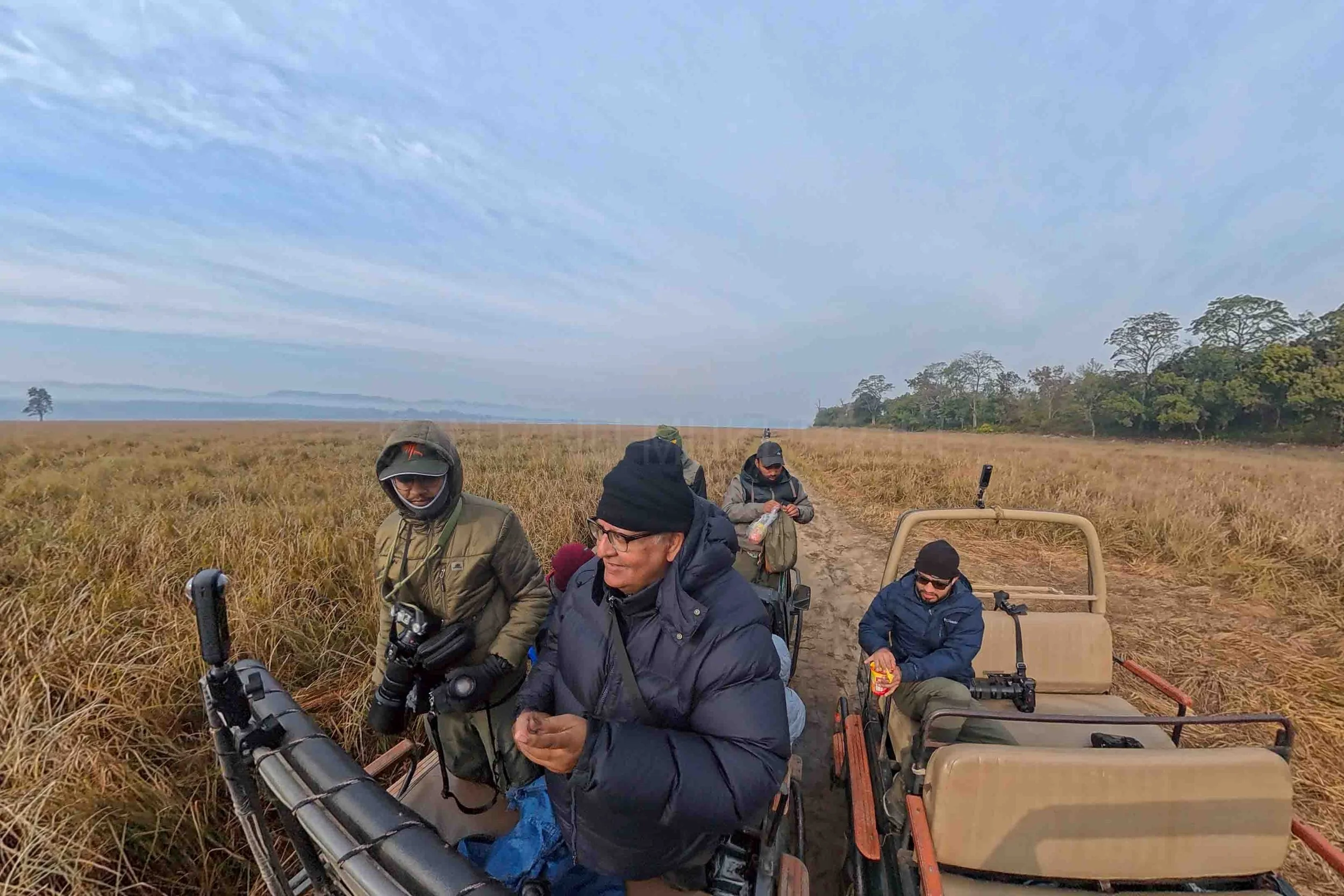
It was cold, and after a while there wasn't much conversation. Our naturalist kept scanning the grass and the treeline. We waited.
Almost an hour later, something moved in the grass.
At first it was barely noticeable. Then the movement became more deliberate and, slowly, Parwali emerged.
She walked through the tall grass towards the river, completely unconcerned about us. The morning light had turned warm, while the mist still lingered around the edges of the landscape.
We had enough time to photograph her. And then, eventually, I put the camera down.
Sometimes that is the best part.
It isn't just about getting the photograph. It is about seeing the tiger in that particular landscape, in that particular light, at that particular moment. No amount of planning can guarantee that.
And there was plenty to see between the tiger sightings.
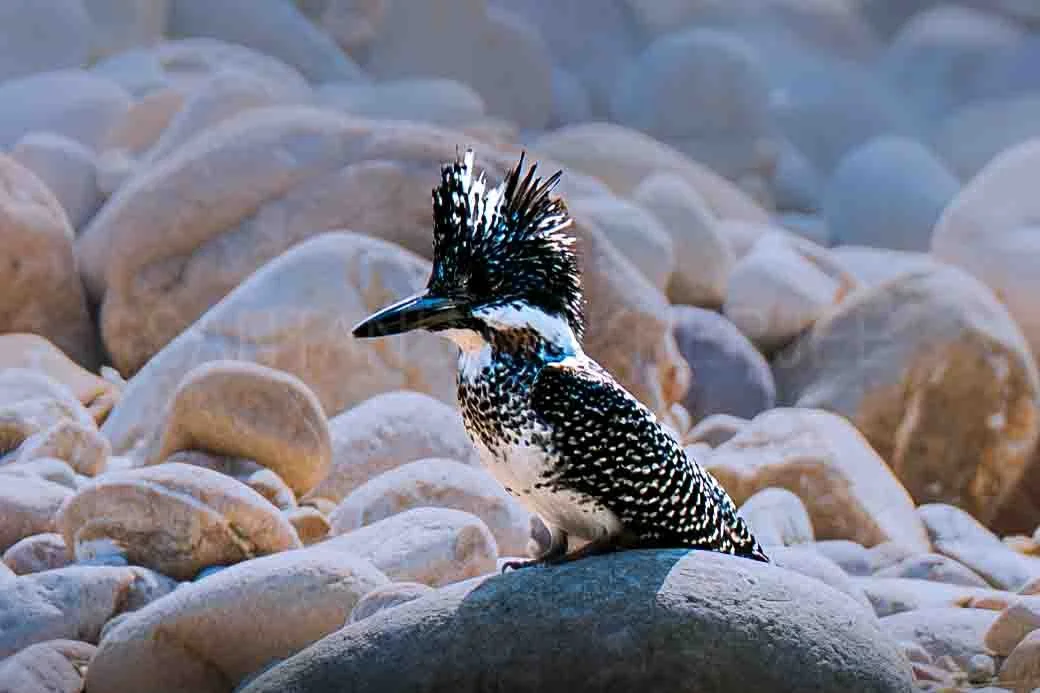
The Ramganga was full of birdlife. A crested kingfisher sat almost motionless among the river stones, looking remarkably ornate against the rather stark winter landscape. We came across a pair of Pallas’s sitting patiently on a bare branch, and periodically working the reservoir, making long circuits before returning to the perch.
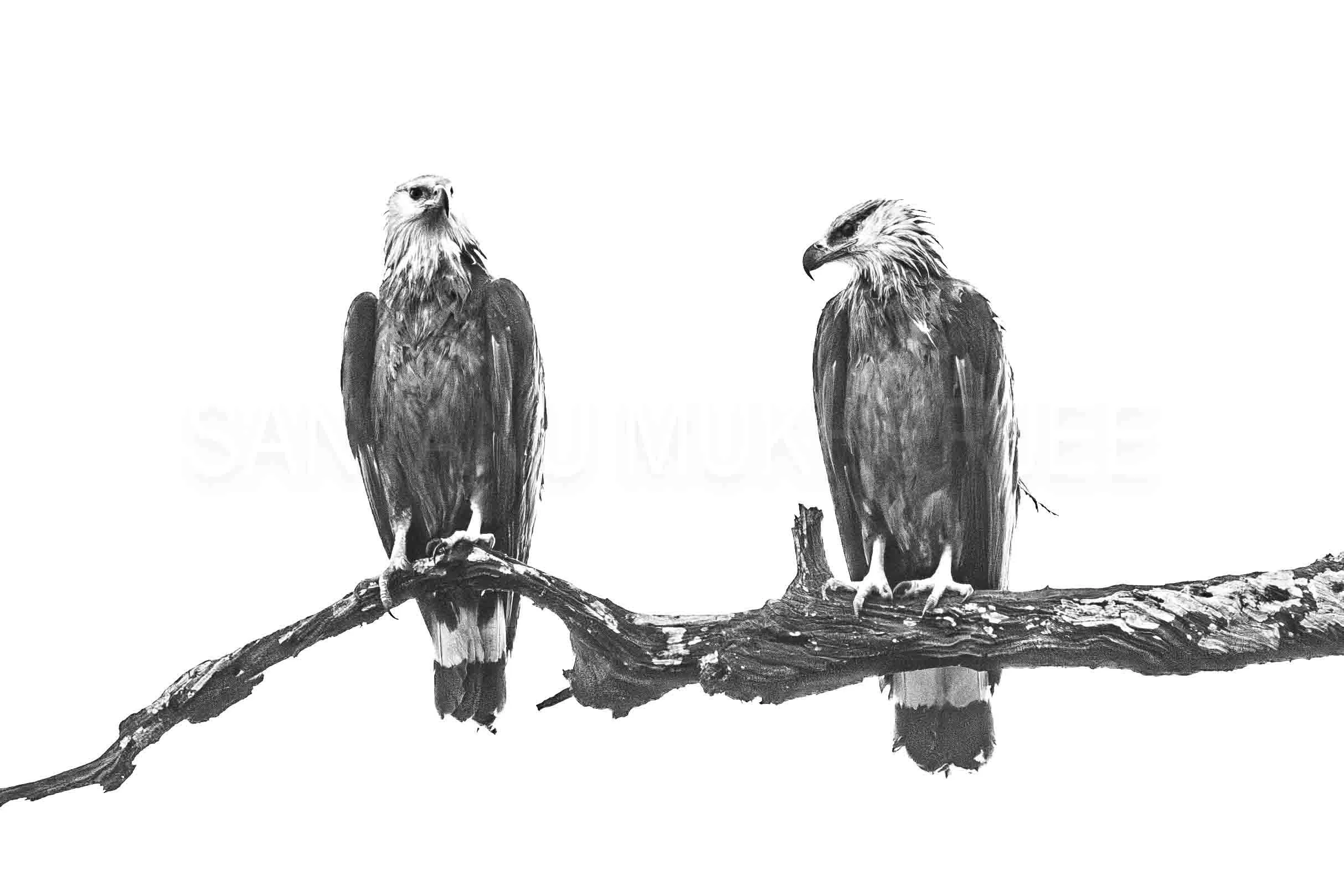
Five tiger sightings out of six safaris was far more than I could have hoped for.
Two tigresses, each with her own territory and personality. Gharials fighting in the river. Elephants moving through the mist. And that long wait on the chaur, eventually rewarded by Perwali walking through the golden grass beside the Ramganga.
But what I will remember most about this trip is not any one sighting. It is the landscape — the cold mornings, the mist over the river, the sal forests, the golden grasslands and the feeling of being somewhere that still feels wonderfully removed from the outside world.
If you are planning a visit to Corbett, I would strongly recommend trying for Dhikala. The permits may be difficult to get and the accommodation is certainly not luxurious, but the experience is worth it.
I came back to Corbett after nearly fifty years.
I don't think it will take me another fifty to return.
Perhaps next time I will come in summer, when the elephant herds descend from the hills and the Ramganga is at a very different level.
That will be a different Corbett.
For now, I am happy to let this one settle in my memory.
